Betty's Daughter Arts Collaborative continues the "Working Our Rainbows: Critical Approaches to Africana Women's Performance Methodology" Series
Peace family. As I continue to think about "women's work", political division, art, community and sustainability, I am critically looking at these terms-feminist and womanist and how they create/define/conflate/re-iterate power, everyday "happenings" and creative performance dynamics among Black women.
The Working Our Rainbows Series is an at-home, mobile device, on line lecture series devoted to Black Women in Performance Studies. Please email bettysdaughterarts@gmail.com if you would like to host a lecture!
This weeks lesson:
1. Watch Staceyann Chin's performance of "Feminist or Womanist".
http://www.youtube.com/watch?v=PQOmyebFVV8
2. Read Revisiting "What's in a Name?": Exploring the Contours of Africana Womanist Thought
Nikol G Alexander-Floyd, Evelyn M Simien. Frontiers. Boulder:2006. Vol. 27, Iss. 1, p. 67-89,131-132 (25 pp.)
I will email the essay if you would like.
3. Write a letter to yourself answering some or all of these questions: 1. Am I a feminist? 2. Am I a womanist? 3. How do I identify politically, culturally, socially?
4. If you were talking to Alice Walker right now, what would you say to her about womanism? 5. If you were talking to Clenora Hudson Weems right now, what would you say to her about womanism? 6. If you were speaking to Audre Lorde right now, what would you ask her about hybridity? 7. If you were talking to your mama right now what would you ask her about herself?
Hit me up on facebook or respond on my blog here!
Peace and performance!
Ebony Noelle Golden
bettysdaughterarts@gmail.com
bettysdaughterarts.synthasite.com
Wednesday, April 08, 2009

Saturday, April 04, 2009
Leveraging the Academy: Suggestions for Radical Grad Students and Radicals Considering Grad School by Chris Dixon and Alexis Shotwell
Leveraging the Academy:
Suggestions for Radical Grad Students and Radicals Considering Grad School
by Chris Dixon and Alexis Shotwell
Suggestions for Radical Grad Students and Radicals Considering Grad School
by Chris Dixon and Alexis Shotwell
Romanticized, demonized, celebrated, denounced -- among activists in the United States and Canada, academia is all of these things. It is a gate-keeping institution that shapes and is shaped by relations of power and privilege. It is a site of intense struggle: those who are structurally excluded battle for access, while those who study there fight for affordable and relevant education, and those who work there demand dignity, respect, and living wages. It is a place both where people develop radical politics and transformative visions and where people seclude themselves in insular, disconnected ivory towers. These contradictions are stark. Yet radicals have tried to make use of the academy. Since the 1960s, in particular, graduate school has become an attractive pathway for many activists, but also often an isolating and depoliticizing one. This is still true today, as radicals active in a variety of movements are choosing to go to grad school.
The questions bound up in this choice are urgent ones: How might activist grad students concerned with fundamentally transforming this society make sense of the university? How might radicals involved in the university relate to it, evading its pitfalls and exploiting its openings? And most importantly, how can the space of the university be made useful for building broad-based radical left movements? We aim to approach these questions by offering some suggestions based in our own experiences of ambivalently occupying the university as graduate students with the hopes of using it to advance political work.
We are fortunate to be thinking about these issues from a site that has shown us many of the possibilities and perils of the academy. We are both graduate students at the University of California, Santa Cruz, in the History of Consciousness department. UCSC has a distinguished history of student, worker, and faculty struggle. During our tenure there, this history bloomed into vibrant coalitional work linking low-wage workers in union struggles with direct-action counter-recruitment manifestations, rank-and-file militancy in the teaching assistant union, and lively struggles around access and retention for traditionally marginalized students. Being at UCSC also taught us a lot about how much work is still to be done in university settings: we witnessed deep racial divides among UCSC's activist communities, "radical" faculty unwilling to step up to support low-wage immigrant workers, and a troubling tendency to forget even recent campus organizing history.
Our trajectories also shape our thinking on these matters. Chris, currently in the fifth year of his PhD, came to grad school out of a long engagement with anti-authoritarian politics and direct action organizing. Alexis came to grad school with a background in feminist politics and community radio and has just completed her doctorate. Both of us worked on rank-and-file organizing with and against our own union (UAW Local 2865), struggled in solidarity with campus service workers as part of a student-worker coalition, participated in counter-recruitment work, assisted with immigrant justice organizing, and worked on an annual Disorientation Guide. We engaged in many of these activities through a political collective made up of six grad students.
Our experience of doing political work as grad students is obviously partial. We don't think we have definitive answers. But we've tried to approach our work experimentally, and we'd like to share some results. Our hope is to open some conceptual terrain for expanded discussion and imagination about academe as a resource for change. We know that, as individuals, graduate students can and do play important activist roles outside the academy. In fact, we think that sort of work is vital. However, we want to examine some of the ways that we can do political work in university settings as well. We address these thoughts primarily to radical grad students and activists considering grad school, but we believe they are relevant for anyone concerned with making use of the academy to further movement-building and social transformation.
But First, a Reality-check
Graduate school shares some characteristics with what we hear about boot camp: humiliation, arbitrary rules, a pervasive anxiety about one's self-worth, dictatorial superiors wielding life-changing power, and grinding routines designed to wear down one's ability to resist. In short, grad school often creates exhausted, insecure, status-conscious people who distrust their own judgments and are thus more susceptible to the prevailing norms and styles of the academy. Perhaps the most pernicious norm is an individualistic and isolated mode of intellectual engagement, cutting grad students off from the very work that we think they are uniquely situated to take up.
On top of all this, being a graduate student is genuinely hard. We plunge into an area of study because we feel some passion for it, we spend years learning its vocabulary and methods, and we try to formulate research projects that will sustain our passion while allowing us to survive. Frequently our families of origin, and our non-academic friends, don't understand what we're doing, why we're doing it, or why it would be worthwhile. And even unionized grad students don't make much money, so we often come out of grad school with big debts and slim job prospects.
These features have been exacerbated by the neoliberalization of the university and the increased casualization of its workforce. That is, universities are increasingly run on a profit-making model, and a rapidly growing number of university employees are part-time, sessional workers with few rights. Campus workers -- from custodians and dining hall workers to clericals and non-tenure-track faculty -- are doing more labor for less pay in more precarious circumstances. Marc Bousquet has beautifully analyzed the place of graduate employee labor in this context. In "The Waste Product of Graduate Education: Toward a Dictatorship of the Flexible," Bousquet argues that the grad school system isn't primarily about producing PhDs for an imagined market in tenure track jobs. Rather, it is aimed at extracting teaching labor from not-yet-degreed graduate student employees, who will too often later become part of the casualized adjunct pool.
These challenging circumstances also point to opportunities. Each site of exploitation and misery in the lives of grad students is also a site for struggle. And because there are so many of these sites, grad students are uniquely positioned to help build connections among widely varied communities. Graduate students are workers: as teaching assistants, instructors of record, lab assistants, and research assistants, we can struggle for workplace justice and in solidarity with other workers. Graduate students are teachers: as teaching assistants and instructors, we can enact liberatory pedagogical methods, introduce oppositional knowledge and histories, support marginalized undergraduates in their university education, and more. Graduate students are students: as learners and researchers, we can help develop ideas that are relevant for changing the world. And graduate students are located in academic institutions: as members of university communities, we can participate in broader struggles to de-militarize university research, support outreach and retention, challenge funding and curricular priorities, fight sweatshop sourcing of food and university-branded clothing, and more.
Many grad students are uniquely situated in one other way: we come to grad school with movement backgrounds and activist commitments or develop political commitments through grad school. We should be nurturing and drawing on these experiences and commitments, perhaps with the help of some of the following suggestions. These things not only help to leverage the academy for changing the world, but can also help combat some of the soul-destroying features of academe we talked about above. Indeed, it is precisely this work that in itself changes the grad school experience from something like boot camp to something meaningful and politically useful.
Suggestion One: Understand the Academy as a Nexus for Organizing and Capacity-building
The university is by no means the most important site of social struggle today. Though radical ideas sometimes show up in academic discourse, they almost always originate elsewhere. Still, in the spirit of recognizing where we're located and trying to work from there, we think it is important to appreciate features of academe that make it ripe for political work. For one thing, though we can rightly critique the ivory tower, we can just as easily understand how universities are situated in dense webs of interconnection. The university, in fact, is a nexus through which systems of power manifest. For example, universities frequently replicate frameworks of access based on race and class. Organizing efforts for outreach and retention programs, or for various "ethnic studies" departments, are vibrant challenges on these grounds. Similarly, many universities are connected in significant ways to the military industrial complex; campaigns to keep recruiters off campuses and to demilitarize university funding are making crucial interventions in military-university relationships. Universities are also major employers and buyers of goods and services; pro-union, living wage, and anti-sweatshop struggles on campuses can thus have important catalyst effects. Because universities also concentrate a large number of energetic, exploratory young people in one place, there is a lot of potential for mobilization. In many ways, then, the university is an appropriate site for organizing, and political work there can have broader effects.
One especially significant effect of organizing in the university is a different kind of education, one that students gain not primarily through classrooms or books but through activism. Many undergrad activists develop skills and analysis as they work in student organizations, plan events, actions, and campaigns, face hostile administrators, contend with apathetic peers, try to understand and describe the systems they seek to change, experiment with organizing techniques, write and design flyers, websites, and publications, and engage in many other aspects of activist work. This is capacity-building: growing the sensibilities and competencies to do movement work. And graduate students can help in this process. We can share our own experiences as organizers (mistakes included). We can spark reflection and long-term strategic thinking. We can share our resources for political education. We can encourage student organizers to take care of themselves. We can use our positions to help student activists navigate tensions between their academic and political work (not necessarily mutually exclusive). We can ourselves remain (or become) lively, engaged participants in social struggles.
When we see the university as a nexus for struggle and capacity-building, we expand opportunities for social transformation.
Suggestion Two: Work with Undergraduates
What successful grad student organizing we did included significant work alongside and with undergraduate activist groups and involved bridging a pervasive grad-undergrad divide. In general, grad students rarely get involved in student activist groups -- as though "student" means "undergrad." Frequently, grad students are scared of large groups of undergrads, feel silly and awkward engaging with undergrad organizing, or feel like we're older, superior, and in a different place in our lives. And often undergrads don't think of inviting grad students to meetings or actions because we're perceived as disengaged and disinterested, or just intimidating. Sometimes these sorts of worries are accurate; addressing them can even be useful on both sides, since they involve broader questions about being welcoming and legible. It is true that graduate students and undergraduates are frequently in different places of their lives and will sometimes have different organizing priorities and internal cultures. But undergraduate student organizers are often the major motor of campus struggle. Also, with few exceptions, they're really fun.
Graduate students can contribute substantially to the campaigns and political work in which undergrads are involved. In 2004, for example, a student-worker coalition at UCSC initiated a year-long organizing campaign in support of low-wage and predominately Latino/a campus workers. As part of this coalition, graduate students made weekly classroom announcements about upcoming events and the ongoing campaign; wrote and distributed informational materials; drafted and circulated petitions and letters; helped to write press releases; used our access to faculty to advance organizing objectives; agitated with our union to get support for the coalition's goals; and mobilized grad students and other members of the campus community for pickets and direct actions. We've also seen grad students effectively supporting undergraduate work by helping with student publications, mentoring individual undergrad organizers, and providing some institutional memory. But we don't have to just play support roles; we can also initiate campaigns and work as full partners in ongoing organizing. In order to do any of this, however, grad students must build real relationships with undergraduates on a basis of equality and respect. This usually requires facing up to some of the ingrained teacher-student hierarchies we tend to manifest.
When collaborative undergrad-grad organizing happens, it is powerful and energizing.
Suggestion Three: Organize Grad Students
Organizing grad students, as the saying goes, is like herding cats (for all the reasons we talked about in our "reality check"). And often active grad students get isolated and drained by working hard in ineffective or retrograde institutional structures, or by immersion in the political infighting and posturing typical of many academic departments. And yet, it is not impossible to organize grad students in ways that sidestep these dangers and advance positive change. Institutional positions and good departmental cultures can have important activist potential, particularly if they are connected to broader organizing.
Probably the single most common vehicle for organizing grad students is around workplace issues. After all, the main thing we share as grad students, other than doing lots of research, is our wages and working conditions as teaching and research assistants. Such organizing usually results in an attempt to form a union. Sometimes these efforts win formal union recognition by university administrations, often not. (Sometimes, as in the case of New York University, grad students win recognition and the university repeals it through legal machinations; that fight is ongoing.) If you are not a member of a union, it is definitely worth organizing to form one and have it formally (legally) recognized. If you are part of a union, you'll face different challenges. Most unions big enough to run university organizing campaigns follow a business union model, usually resulting in formally democratic structures that are not in fact very responsive to popular rank-and-file initiatives. These unions also tend to resist any response to workplace injustice other than contract enforcements narrowly defined. Opportunities for solidarity work are likewise narrowly understood. In short, a TA union itself is a site of struggle. It's important for us to fight collectively to improve our working conditions, but we can't stop there.
We can work with and against our unions in ways that hold true to the ideal of worker solidarity and challenge a business union model. For example, we have been inspired by grad students at York University in Toronto, who have brought their union (CUPE Local 3903) under robust rank-and-file control, in line with participatory democratic functioning, militant solidarity action, and broader social justice work. Even if our union is really messed up, we can follow Local 3903's example and form "flying squads," in which grad student workers actively mobilize to support other unions' pickets and other community initiatives. At UCSC, we developed a graduate student solidarity network to organize and mobilize grad students to join other workers, on and off campus, for labor actions, and to address some of the failings we saw in our own union. Over the last two years, this network has developed into a kind of reform caucus, UAW Members for Quality Education and Democracy, which seeks to support labor struggles and draw connections between workplace conditions and accessible, quality education. This is an example that we think resonates with many other rank-and-file initiatives and aspirations, not only in the graduate student union realm.
It is also important to nurture lively political communities among grad students beyond the limited goal of a single campaign, strike, or event. Union culture, for example, requires much more than just mobilization and meetings; it needs a sense of comradeship, a collective practice of caring about what happens to other people. In our experience, when people work together on specific projects over time, they come to trust each other personally and politically. This trust is essential to grounded political community. The tightrope we walk here, of course, is difficult as cliquishness and insularity often result from close organizing ties. And so we think it is important to create structures that people can easily access without already being linked to existing social-political networks. One experiment we tried in this vein, still ongoing, is a non-university-based email listserv for communication among radical grad students at UCSC; we called it "radgrads." At the beginning of each school year, an announcement goes out on the grad email lists, explaining the purpose of radgrads and inviting people to join it. The list serves as a vehicle for informing grad students of events and campaigns on and off campus, a site for discussion among students from very different departments, and occasionally a means for organizing social events and in-person discussions. We've also seen the success of, for example, a women-of-color grad research and action collective and queer grad groups in creating supportive institutional cultures for political work.
When grad students come together, we are formidable.
Suggestion Four: Question Professionalization and Individualism
Perhaps one of the starkest differences between undergrads and grads is that while the university is often a place of politicization for undergraduates, it is more often a place of depoliticization for grad students. Aside from time and money pressures, two of the main depoliticizing forces we encounter are professionalization and individualism, as they are engrained in academic culture. Professionalization is the process of learning and adopting the "rules of the game" of academic life. Usually, these are middle- and upper-middle class coded ways of talking, dressing, and socializing. They have historically been most comfortably deployed by men, and they are very white. Professionalization includes a set of academic behaviors and accomplishments, like publishing papers, presenting work at conferences, applying for grants and fellowships, and successfully conducting a job search. Individualism is a trait that fits neatly into academic professionalization; individual achievement and brilliance are highly praised, almost defining characteristics of academe. Academics are supposed to live the life of the mind, immune to bodily needs and relational connections. Thus, genuinely collaborative work is not taken as seriously as solitary genius, even in the sciences, and we are expected to diligently pursue our individual "careers." As a result, academic life is often deeply isolating, both in terms of how we conceptualize our work and how our work process is structured.
It might be tempting to throw professionalization out entirely. After all, it brings together many of the most rage-inspiring aspects of academic culture. We call for a questioning of professionalization, however, because there are many people who come into the academy from working-class backgrounds, or who are racialized, or fat, or otherwise inappropriate in the ivory tower's halls. For these grad students, a careful investigation into the norms of professional life will be key to infiltrating and surviving academe. That is, professionalization can be worth pursuing. Even for the relatively privileged, understanding professionalization is important in refusing to internalize its imperatives. At the same time, we think it is crucial to develop alternatives to professionalization. In particular, a prevailing myth supporting the professionalization imperative is the idea that every worthy PhD student should expect to land a tenure-track job. But this has never been the case. And as universities shift more and more teaching onto contingent labor, it looks very likely that it never will be. As graduate students, we must imagine life beyond the tenure carrot and the adjunct stick. There are, as far as we know, no maps laid out for this work, but we think it's worth exploring.
Collaborative work, in our experience, offers a way to simultaneously challenge professionalization and refuse depoliticization. This alternative to the individualist model can be practiced among academics and also with and among activists outside of academic contexts. For those engaged in movements, this mode should be familiar. Activist intellectual work is often collaborative; it seeks clarity and refinement through the process of conversation and collaboration. We noticed the promise of this kind of approach in our political collective, particularly as we wrote a social-economic analysis of our university's priorities and practices. In general, we found working collaboratively as graduate students outside of academically sanctioned settings to be both challenging and exciting. Often in our lives as grad students we relate to one another as colleagues, interlocutors, or rivals, but usually our work is our own. Politically-motivated shared work is a powerful antidote to these relationships. In our case, we also discovered that it gave us more ground to stand on in our broader organizing work. We experienced this, in a different way, when we assembled an all-graduate-student affinity group for street actions in San Francisco after the ground invasion of Iraq in 2003. Integrating these sorts of approaches into our academic work can have similarly profound effects. And more fundamentally, such approaches can challenge and change the ways we presently think about our day-to-day work routines and ourselves as intellectuals.
Critically approaching professionalization and developing collaborative means of doing activist intellectual work opens surprising and liberating spaces.
Suggestion Five: Build Accountability to Movements into Research and Teaching
The question of accountability is a crucial way to frame and understand our work. We can approach it, among other ways, in terms of how knowledge itself is produced. Veteran activist and academic Richard Flacks nicely illustrates this, recalling that a central slogan among radical sociologists in the late sixties was "knowledge for whom?" The question remains pressing, and it begs another: Accountability to whom? One way to answer this question is think about the communities that validate and thus structure our scholarship. With whom is our work in conversation? To whom is it accountable? How are the answers to these questions related to each other?
Some of us have managed to find ways of sustaining political relationships with activists in a variety of movement contexts. Often, these relationships even become an inspiration for or the focus of our academic work. This is good and useful. But there are many open questions about what accountability is and how we should enact it. Of course, in this case, accountability would involve explicit negotiation with research "subjects" and some account of how the research will come back to the community. But such a mode of accountability will always be dissatisfying and partial -- it will always fail. In general, we think of accountability as involving far more than a basic attention to research ethics. It is a relationship that orients our attention, commitments, and research questions. When academics think of ourselves as standing in solidarity with movements as equal participants in struggles for social transformation, our relationship to what work we do, how we share it, and for whom we're doing it might fundamentally change. This is how we understand accountability.
Issues of accountability are also central to teaching. After all, most of us will teach, sometimes a lot, during graduate school. It is not uncommon to have the chance to design and teach one's own class, and almost everyone works as a teaching assistant at some point. There is no way that we can overview here all of the useful work on radical pedagogy -- work on canons, how knowledge is formed in relation to power, how we can use the classroom as a place to teach for liberation, and how our teaching selves can be fully integrated and present beings. There are excellent and important resources out there. But we do want to note the difficulty of bringing activist commitments and sensibilities into the classroom. Teaching is the some of the most fulfilling work either of us has done. It is also the most challenging. We have encountered both of these most strongly when we have tried to directly bring our political commitments into our teaching. And so we maintain that teaching is immeasurably strengthened when it is accountable to movements. In our experience, this means facilitating ways for students to not only think critically about the world but to develop means of actively engaging it. It means finding ways to both support and challenge student activists. It means challenging social hierarchies as they manifest in teaching spaces. It means seeing even very politically problematic students as utterly worth working with. It means understanding the classroom as a space that is densely interwoven with the rest of the world.
Developing accountability in our research and teaching helps us make genuine contributions to movements.
Toward Discussion and Collective Strategizing
When we started graduate school, we were searching for models for how to do activist intellectual work in the academy while also sustaining strong connections to movements. We were able to identify individual professors and grad students who seemed to be successfully navigating some of these tensions, but we found little in the way of explicit discussion and collective strategizing. And so, in the last several years, we have tried to build some of our own models, always incomplete, at the same time that we have attempted to develop political practice appropriate to our situation. Perhaps the hardest part has been finding ways to generate the discussion and strategizing that we couldn't find but urgently need. We have been fortunate to participate in a lively political community at UCSC, but we have always felt that activist grad students in many other places would have crucial insights to offer to these conversations. In our view, we especially need discussion that evades political posturing and realistically engages with the question of sustainable organizing in unsustainable circumstances. We hope, then, that these suggestions might help spark serious and ongoing reflection and dialogue. We hope too that they might serve as a support of some kind for radical grad student activity. Grad students, as we have argued, are in a unique structural location where political work can have powerful effects. We must develop ways of collectively sustaining and strengthening that work. Doing so will help move us from ineffectiveness and isolation to meaningful and strategic activist intellectual work. It will help us leverage the academy for movement-building.
Wednesday, April 01, 2009
Wednesday, March 25, 2009

Peace Gumbo YaYa Supporters,
Thank you for your generous thoughts, participation and support since the first cycle of Gumbo YaYa in 2007. Gumbo YaYa has travelled from NYC to NC drawing on the power of sisterhood and creative healing in every session or workshop. The second cycle of gumbo yaya is wrapping up in Durham, NC.
Here are a few updates:
New Community Support!
Gumbo YaYa is pleased to announce new sponsor, The Body Shop. The Body Shop (http://www.thebodyshop-usa.com/bodyshop/) is providing wellness and beauty items for the Gumbo Yaya Sister Circle and supporters. Many thanks to our awesome intern, Kenya C. Harris, for solidifying this sponsorship. You rock Kenya!
Love is Radical Performance!
Gumbo YaYa is wrapping up its second cycle on 3/29/2009 with a community performance, panel, and potluck.
What: Love is Radical: Performing Mothering, Daughtering, and Sistering
When: 3/29/09, 2:30 pm
Where: 214 Broadway St.
Durham, NC
Who: The Entire Community
Cost: Free
Why: Because we want to share our magic with you!
Please bring a dish, dessert, or beverage for the community potluck.
More Information: bettysdaughterarts@gmail.com or 919.423.3780
Please tell everyone you know to come out and support Gumbo YaYa!
Gumbo on the Go!
A Gumbo YaYa session was presented at the 5th Annual State of the Nation Arts and Performance Festival. Accepted with open arms by a diverse community of artists and activists, women and men engaged in "Brilliant Tomorrows: Sister(ing) as Creative Communal Performance" session in New Orleans, LA. www.sonfestival.org.
Brilliant Tomorrows will also be presented at the first We Are 1 Women's Conference in Durham, NC. The conference seeks to bring women together regardless of sexuality, faith, ethnicity. Check them out at http://www.infinitydiamondclub.com/infinity_diamond_club_015.htm.
On the Horizon...
Gumbo YaYa, the movie!
Gumbo YaYa, the curriculum!
We want to hear from you!
-Join our list serv at http://bettysdaughterarts.synthasite.com/contact.php.
-Check out our website and leave a comment at www.iamnotaproject.wordpress.com.
In sisterhood and community building,
Gumbo YaYa/ or this is why we speak in tongues
Wednesday, March 18, 2009

Yeah Lex!
Just wanted to let everyone know that our colleague and good friend Alexis Pauline Gumbs was identified by David Horowitz as one of the radical faculty ruining america!!!
Yay! Alexis!! you know you are on the right path when Horowitz has something to say about you!
see below
well,the first chapter is pretty much all about duke, and his mention of you is under a section called "Marxists and 'Queer Black Trouble Makers': The Department of English." He then highlights specific classes, and your class "To Be a Problem," is the first one. He writes:
"The synopsis explains 'This class will explore trouble-making, radical performative critique, and the transgressive and embattled act of (visual, textual, sonic and multi-media) publishing as possible responses to systemic and individual exclusions.' According to the instructor, a graduate student who calls herself a 'queer black trouble maker,' since 'publishing is an act of stolen power for outcasted communities, this class will be a publication of what it can mean to be problematic in a society inflected by race, class, sexuality, and gender norms.. Our aim is not to solve the problems of classism, sexism, homophobia and transphobia as inflected by race, but rather is to create a space where it is possible to act, speak, write, and think otherwise, anyway.' In short, the classroom is intended to be a forum for the radical views of instructor Gumbs.
"Throughout the course, students are asked to consider American blacks as an 'outcast community,' a point underscored by questions that they are expected to consider. ('Is outcast status the mark of being 'truly' black, or is it grounds to be kicked out of the 'black community'?') The same themes emerge in the books assigned for the course, which exclusively reflect the instructor's idiosyncratic views. The White Boy Shuffle, a novel by Paul Beatty, features as its protagonist a black poet named Gunnar Kaufman, who casts himself as the prophet of 'a divided, downtrodden, and alienated people' and voices sentiments such as this: 'In the quest for equality black folks have tried everything. We've begged, revolted, entertained, intermarried, and are still treated like shit.'
"Other assigned texts take an even more strident line on races. Thus, Sister Outsider, a book of essays and speeches by the lesbian activist Autre Lorde, describes American society as a 'racist patriarchy' that intentionally seeks the 'destruction' of its black citizens. The introduction to Home Girls: A Black Feminist Anthology claims that the 'black feminist agenda' has failed to gain a popular following because of the 'virulent racism' of American society. Essays featured in the book decry the 'racism of white women in the women's movement,' the 'prevailing popular culture of racism,' and the 'racism that is perpetuated by the white male dominant society.' No other views need apply."
The book is littered with these kinds of flatfooted readings, but it will also most likely be read by many on the neocon right who need to have their suspicions about the academic world--and of people of color in it--confirmed in the typical racist/sexist/homophobic/etc way.
Yay! Alexis!! you know you are on the right path when Horowitz has something to say about you!
see below
well,the first chapter is pretty much all about duke, and his mention of you is under a section called "Marxists and 'Queer Black Trouble Makers': The Department of English." He then highlights specific classes, and your class "To Be a Problem," is the first one. He writes:
"The synopsis explains 'This class will explore trouble-making, radical performative critique, and the transgressive and embattled act of (visual, textual, sonic and multi-media) publishing as possible responses to systemic and individual exclusions.' According to the instructor, a graduate student who calls herself a 'queer black trouble maker,' since 'publishing is an act of stolen power for outcasted communities, this class will be a publication of what it can mean to be problematic in a society inflected by race, class, sexuality, and gender norms.. Our aim is not to solve the problems of classism, sexism, homophobia and transphobia as inflected by race, but rather is to create a space where it is possible to act, speak, write, and think otherwise, anyway.' In short, the classroom is intended to be a forum for the radical views of instructor Gumbs.
"Throughout the course, students are asked to consider American blacks as an 'outcast community,' a point underscored by questions that they are expected to consider. ('Is outcast status the mark of being 'truly' black, or is it grounds to be kicked out of the 'black community'?') The same themes emerge in the books assigned for the course, which exclusively reflect the instructor's idiosyncratic views. The White Boy Shuffle, a novel by Paul Beatty, features as its protagonist a black poet named Gunnar Kaufman, who casts himself as the prophet of 'a divided, downtrodden, and alienated people' and voices sentiments such as this: 'In the quest for equality black folks have tried everything. We've begged, revolted, entertained, intermarried, and are still treated like shit.'
"Other assigned texts take an even more strident line on races. Thus, Sister Outsider, a book of essays and speeches by the lesbian activist Autre Lorde, describes American society as a 'racist patriarchy' that intentionally seeks the 'destruction' of its black citizens. The introduction to Home Girls: A Black Feminist Anthology claims that the 'black feminist agenda' has failed to gain a popular following because of the 'virulent racism' of American society. Essays featured in the book decry the 'racism of white women in the women's movement,' the 'prevailing popular culture of racism,' and the 'racism that is perpetuated by the white male dominant society.' No other views need apply."
The book is littered with these kinds of flatfooted readings, but it will also most likely be read by many on the neocon right who need to have their suspicions about the academic world--and of people of color in it--confirmed in the typical racist/sexist/homophobic/etc way.
Monday, March 16, 2009
Eternal Summer of the Black Feminist Mind: Claudia Jones

- Jones was known for giving out book lists to women she met on the street, in the laundromat and everywhere else. Our radical reading group honors this legacy.
Eternal Summer of the Black Feminist Mind: Session 3
Claudia Jones---Co-Sponsored by the People's Durham Initiatve
March 31st 6pm
Potluck at Lex's House (alexispauline@gmail.com for directions)
In her crucial book on the political life of Claudia Jones, Carole Boyce Davies describes Jones as "Left of Karl Marx." Jones is literally buried in the same cemetery as Marx, to his left, but Boyce Davies is also suggesting that Claudia Jones a rarely remembered black feminist Trinidadian communist organizer who was deported during the McCarthy Era for her radical beliefs and activities, is also left of Marx politically because her black feminist approach and her empahsis on cultural transformation challenged the limits of Marxism.
In her essay "An End to the Neglect of the Problems of the Negro Women" (download here) Claudia Jones articulates her understanding of how black feminism can transform the left in a revolutionary way. Join us, in Durham or wherever you are in reading and discussing this essay this month (because every month is women's history month!!!!)
love,
BrokenBeautiful Press
Wednesday, March 11, 2009
ORIGINAL FOR COLORED GIRLS CAST MEMEBER OFFERS PEFORMANCE WORKSHOP!!!
The Theater of the Oppressed Laboratory (TOPLAB)
--a member of The Institute for Popular Education at the Brecht Forum--
--founded in 1990--
451 West Street
New York, New York 10014
(212) 924-1858
toplab@toplab.org
http://www.toplab.org
The Theater of the Oppressed Laboratory presents
Confronting Diabetes with Theater
Two Workshops with Robbie McCauley
Saturday, March 21,2009 from 1:00 to 4:00 pm
Register online at http://brechtforum.org/events/diabetic-dramas-1?bc=
Saturday, April 25,2009 from 1:00 to 4:00 pm
Register online at http://brechtforum.org/events/diabetic-dramas-2?bc=
Award-winning actress Robbie McCauley returns to the Brecht Forum to lead
a series of workshops called "Diabetic Dramas" based on subject matter
from her performance piece *Sugar*, which looks at everything there is to
see about sugar, from slavery to colonialism to American mythologies to
diabetes. An ongoing work-in-progress, *Sugar*, which will be presented
again at the Brecht Forum in June, will incorporate some of the story
exchanges by participants in the "Diabetic Drama" workshops facilitated by
Ms. McCauley. Through the interweaving of stories, images, facts and lore
we will see that diabetes is not only a medical issue but also one of race
and class, and we will also see how sugar is sometimes something that is
very bittersweet.
The first Diabetic Drama workshop took place in January and will continue
with two more workshops on March 21 and April 25. It is not necessary to
have attended the January session to enroll in the March or April
sessions.
Robbie McCauley has been an active presence in the American avant-garde
theater for three decades. One of the early cast members of Ntozake
Shange's *for colored girls who have considered suicide when the rainbow is
enuf*, Ms. McCauley went on to write and perform regularly in cities across
the country, striving to facilitate dialogs on race between local whites
and blacks.
In the 1990s, she received both an OBIE Award (Best Play) and a New York
Dance and Performance (BESSIE) Award for *Sally's Rape*, which she wrote,
directed and performed.
A core member of the American Festival Project, she has practiced and
taught theater in several communities throughout the US and abroad. She is
anthologized in several books, including Extreme Exposure; Moon Marked and
Touched by Sun; and Performance and Cultural Politics, edited respectively
by Jo Bonney, Sydne Mahone, and Elin Diamond.
In 1998, her *Buffalo Project* was highlighted as one of the "the 51 (or so)
Greatest Avant-Garde Moments" by the Village Voice, a roster that included
work by artists such as Igor Stravinsky, Pablo Picasso, and John Cage. Her
recent piece, *Sugar*, a work in progress, was presented at Ohio State
University in collaboration with several institutional departments and
organizations, and with members of Columbus' Near East community.
Robbie McCauley is on the Performing Arts Department faculty at Emerson
College in Boston.
Co-sponsored by the Theater of the Oppressed Laboratory (TOPLAB) and the
Brecht Forum.
Tuition--sliding scale: $15-$35
Pre-registration required.
Register online by using the links above or contact TOPLAB at
toplab@toplab.org or (212) 924-1858.
All sessions take place at:
The Brecht Forum
451 West Street*
New York City
* travel directions below
*****
Other Upcoming TOPLAB Workshops
March 28-29: The Rainbow of Desire
(info at http://brechtforum.org/events/rainbow-desire?bc=)
March 29: Closing party for Refuge and Resistance: Reflections on Gendered
Violence (an installation and performance piece conceived and executed by
Ocean Ana Rising)
(info at
http://brechtforum.org/events/ocean-anna-rising-presents-refuge-and-resistance?bc=)
April 18-19: Cop-in-the-Head
(info at http://brechtforum.org/events/cop-head-0?bc=)
May 23-28: Workshops with Augusto Boal
(info from toplab@toplab.org or [212]924-1858)
May 25: An Evening with Augusto Boal
(info at http://brechtforum.org/boalperformance-2009?bc=)
*****
Travel Directions
The Brecht Forum and TOPLAB are at:
451 West Street *
(between Bank and Bethune Streets in the far West Village,
1-1/2 blocks north of West 11 Street)
New York City
* Note: West Street is the same as the West Side Highway
Subway
IND Eighth Avenue A, C, or E to 14 Street or BMT Canarsie L to Eighth
Avenue (take a few minutes to look at "Life Underground", Tom Otterness'
series of whimsical bronze sculptures scattered throughout both sections
of the station). Walk down Eighth Avenue (against the traffic) to Bank
Street (at Abingdon Square). Turn right on Bank and walk west to West
Street. Turn right, walk a quarter-block to 451.
IRT Seventh Avenue 1, 2, or 3 trains to 14 Street. Exit at the south (12
Street) end of the station. Walk a short block west, across 12 Street, to
Greenwich Avenue. Turn left and walk one block to Bank Street. Turn right,
walk west on Bank Street to Abingdon Square. Bank Street continues on the
other side of the park; keep walking on Bank Street to West Street. Turn
right, walk a quarter-block to 451.
New Jersey PATH train to Christopher Street. Walk north (with the traffic)
on Greenwich Street to Bank Street. Turn left, walk west on Bank Street to
West Street. Turn right, walk a quarter-block to 451.
(From Penn Station or Port Authority Bus Terminal take the IND Eighth
Avenue A, C or E trains downtown to 14 Street and follow the directions
above. From Grand Central Station take the IRT Lexington Avenue 4, 5 or 6
trains downtown to 14 Street/Union Square and then change to the BMT
Canarsie L train heading toward Eighth Avenue. Follow the directions
above.)
Bus
#8 (Ninth/Christopher Streets crosstown) to Christopher and West Streets,
walk up West Street to 451.
#11 (Ninth and Tenth Avenues): From uptown--to Abingdon Square (at Bethune
Street). Walk south one very short block to Bank Street, turn right, walk
west to West Street. Turn right, walk a quarter-block to 451. No service
from downtown--Abingdon Square is the terminal stop.
#14A (Grand/Essex Streets/Avenue A/Fourteenth Street crosstown) to
Abingdon Square (at Bethune Street). Walk south one very short block to
Bank Street, turn right, walk west to West Street. Turn right, walk a
quarter-block to 451.
#20 (Seventh Avenue and Hudson Street/Eighth Avenue): From downtown--to
Abingdon Square (at Bethune Street). Walk south one very short block to
Bank Street, turn right, walk west to West Street. Turn right, walk a
quarter-block to 451. From uptown--to 12 Street (near St. Vincent
Hospital). Walk a short block west, across 12 Street, to Greenwich Avenue.
Turn left and walk one block to Bank Street. Turn right, walk west on Bank
Street to Abingdon Square. Bank Street continues on the other side of the
park; keep walking on Bank Street to West Street. Turn right, walk a
quarter-block to 451.
Car
Drive west on 11 Street all the way to West Street (West Side Highway).
Turn right for one block, to 451, between Bank and Bethune Streets.
Along the West Side Highway: From downtown--stay to the right and follow
the Highway to 451, between Bank and Bethune Streets. From uptown: Take
the Highway to Clarkson Street (exit left), make a U-turn at Clarkson and
proceed back up the Highway to 451, between Bank and Bethune Streets.
Note that there is no legal parking on many parts of West Street before
6:00 pm, and parking on the surrounding streets is scarce. Fines for
illegal parking are a minimum of $115, and your car could be towed.
Retrieval can cost you as much as $300. Fees at parking lots and garages
can run as high as $35 a day. WE URGE YOU TO USE PUBLIC TRANSPORTATION.
===
The Theater of the Oppressed Laboratory (TOPLAB)
toplab@toplab.org
http://www.toplab.org
"My fellow Americans, major combat operations in Iraq have ended. In the
battle of Iraq, the United States and our allies have prevailed."
--George W. Bush, May 1, 2003
"...I told the American people that the road ahead would be difficult, and
that we would prevail. Well, it has been difficult--and we are
prevailing."
--George W. Bush, June 28, 2005
"Our cause in Iraq is noble and necessary....America is engaged in a new
struggle that will set the course for a new century. We can and we will
prevail."
--George W. Bush, January 10, 2007
"Prevailing in Iraq is not going to be easy."
--George W. Bush, March 19, 2007
+U.S. military fatalities through May 1, 2003: 140
+U.S. military fatalities through June 28, 2005: 1743
+U.S. military fatalities through January 11, 2007: 3017
+U.S. military fatalities through March 19, 2007: 3217
+U.S. military fatalities as of March 10, 2009: 4256 (this figure exceeds
the number of people killed in all of the incidents that occurred on
September 11, 2001)
+Iraqi deaths due to the US invasion, as of September 2004 (estimated by
The Lancet): 100,000+
+Iraqi deaths due to the US invasion, as of July 2006 (estimated by The
Lancet): 654,965
+Iraqi deaths due to the US invasion, as of March 10, 2009 (estimated
by Just Foreign Policy): 1,311,696*
*These figures are based on the number of deaths estimated in The Lancet
(the British medical journal) study through July 2006, and then updated
based "on how quickly deaths are mounting in Iraq". To do that, Just
Foreign Policy multiplies The Lancet figure as of July 2006 by the ratio
of current deaths reported by Iraq Body Count (IBC), divided by IBC deaths
as of July 1, 2006. The IBC numbers, considerably lower than those cited
by The Lancet, Opinion Research Business (a British polling firm which
estimated 1.2 million Iraqi deaths as of September 2007), and even the
Iraq Ministry of Health, are based on the number of fatalities cited in
various news reports and have been criticized, with much justification,
for not giving an accurate assessment of the real Iraqi death count. The
much more rigorous and statistically-reliable study, conducted by teams
from Johns Hopkins University, Columbia University and Al-Mustansiriya
University, and published in The Lancet in September 2004, put the figure
at around 100,000 civilians dead. However, that data had been based on
"conservative assumptions", according to research team leader Les Roberts,
and the actual count at that time was credibly assumed to be significantly
higher. For example, The Lancet study's data greatly underestimated
fatalities in Fallujah due to the surveying problems encountered there at
that time. The second Lancet study, released on October 10, 2006,
indicated that 654,965 "excess" deaths of Iraqis have occurred since the
outbreak of the aggression and genocide committed by the United States
against the people of Iraq. The current figures provided by Just Foreign
Policy seem to be logically consistent with the increasing rates of death
from 2003 to 2004, and 2004 to 2006.
Sources: http://www.justforeignpolicy.org/iraq/iraqdeaths.html
http://www.antiwar.com/casualties/
http://icasualties.org/oif/
http://www.iraqbodycount.org/
http://www.zmag.org/lancet.pdf
http://www.guardian.co.uk/Iraq/Story/0,2763,1338749,00.html
http://www.agoracosmopolitan.com/Iraq_war.html
http://www.socialistworker.co.uk/article.php4?article_id=6271
http://olm.blythe-systems.com/pipermail/nytr/Week-of-Mon-20041025/008279.html
http://www.thelancet.com/webfiles/images/journal/lancet/s0140673606694919.
The Theater of the Oppressed Laboratory (TOPLAB)
--a member of The Institute for Popular Education at the Brecht Forum--
--founded in 1990--
451 West Street
New York, New York 10014
(212) 924-1858
toplab@toplab.org
http://www.toplab.org
The Theater of the Oppressed Laboratory presents
Confronting Diabetes with Theater
Two Workshops with Robbie McCauley
Saturday, March 21,2009 from 1:00 to 4:00 pm
Register online at http://brechtforum.org/events/diabetic-dramas-1?bc=
Saturday, April 25,2009 from 1:00 to 4:00 pm
Register online at http://brechtforum.org/events/diabetic-dramas-2?bc=
Award-winning actress Robbie McCauley returns to the Brecht Forum to lead
a series of workshops called "Diabetic Dramas" based on subject matter
from her performance piece *Sugar*, which looks at everything there is to
see about sugar, from slavery to colonialism to American mythologies to
diabetes. An ongoing work-in-progress, *Sugar*, which will be presented
again at the Brecht Forum in June, will incorporate some of the story
exchanges by participants in the "Diabetic Drama" workshops facilitated by
Ms. McCauley. Through the interweaving of stories, images, facts and lore
we will see that diabetes is not only a medical issue but also one of race
and class, and we will also see how sugar is sometimes something that is
very bittersweet.
The first Diabetic Drama workshop took place in January and will continue
with two more workshops on March 21 and April 25. It is not necessary to
have attended the January session to enroll in the March or April
sessions.
Robbie McCauley has been an active presence in the American avant-garde
theater for three decades. One of the early cast members of Ntozake
Shange's *for colored girls who have considered suicide when the rainbow is
enuf*, Ms. McCauley went on to write and perform regularly in cities across
the country, striving to facilitate dialogs on race between local whites
and blacks.
In the 1990s, she received both an OBIE Award (Best Play) and a New York
Dance and Performance (BESSIE) Award for *Sally's Rape*, which she wrote,
directed and performed.
A core member of the American Festival Project, she has practiced and
taught theater in several communities throughout the US and abroad. She is
anthologized in several books, including Extreme Exposure; Moon Marked and
Touched by Sun; and Performance and Cultural Politics, edited respectively
by Jo Bonney, Sydne Mahone, and Elin Diamond.
In 1998, her *Buffalo Project* was highlighted as one of the "the 51 (or so)
Greatest Avant-Garde Moments" by the Village Voice, a roster that included
work by artists such as Igor Stravinsky, Pablo Picasso, and John Cage. Her
recent piece, *Sugar*, a work in progress, was presented at Ohio State
University in collaboration with several institutional departments and
organizations, and with members of Columbus' Near East community.
Robbie McCauley is on the Performing Arts Department faculty at Emerson
College in Boston.
Co-sponsored by the Theater of the Oppressed Laboratory (TOPLAB) and the
Brecht Forum.
Tuition--sliding scale: $15-$35
Pre-registration required.
Register online by using the links above or contact TOPLAB at
toplab@toplab.org or (212) 924-1858.
All sessions take place at:
The Brecht Forum
451 West Street*
New York City
* travel directions below
*****
Other Upcoming TOPLAB Workshops
March 28-29: The Rainbow of Desire
(info at http://brechtforum.org/events/rainbow-desire?bc=)
March 29: Closing party for Refuge and Resistance: Reflections on Gendered
Violence (an installation and performance piece conceived and executed by
Ocean Ana Rising)
(info at
http://brechtforum.org/events/ocean-anna-rising-presents-refuge-and-resistance?bc=)
April 18-19: Cop-in-the-Head
(info at http://brechtforum.org/events/cop-head-0?bc=)
May 23-28: Workshops with Augusto Boal
(info from toplab@toplab.org or [212]924-1858)
May 25: An Evening with Augusto Boal
(info at http://brechtforum.org/boalperformance-2009?bc=)
*****
Travel Directions
The Brecht Forum and TOPLAB are at:
451 West Street *
(between Bank and Bethune Streets in the far West Village,
1-1/2 blocks north of West 11 Street)
New York City
* Note: West Street is the same as the West Side Highway
Subway
IND Eighth Avenue A, C, or E to 14 Street or BMT Canarsie L to Eighth
Avenue (take a few minutes to look at "Life Underground", Tom Otterness'
series of whimsical bronze sculptures scattered throughout both sections
of the station). Walk down Eighth Avenue (against the traffic) to Bank
Street (at Abingdon Square). Turn right on Bank and walk west to West
Street. Turn right, walk a quarter-block to 451.
IRT Seventh Avenue 1, 2, or 3 trains to 14 Street. Exit at the south (12
Street) end of the station. Walk a short block west, across 12 Street, to
Greenwich Avenue. Turn left and walk one block to Bank Street. Turn right,
walk west on Bank Street to Abingdon Square. Bank Street continues on the
other side of the park; keep walking on Bank Street to West Street. Turn
right, walk a quarter-block to 451.
New Jersey PATH train to Christopher Street. Walk north (with the traffic)
on Greenwich Street to Bank Street. Turn left, walk west on Bank Street to
West Street. Turn right, walk a quarter-block to 451.
(From Penn Station or Port Authority Bus Terminal take the IND Eighth
Avenue A, C or E trains downtown to 14 Street and follow the directions
above. From Grand Central Station take the IRT Lexington Avenue 4, 5 or 6
trains downtown to 14 Street/Union Square and then change to the BMT
Canarsie L train heading toward Eighth Avenue. Follow the directions
above.)
Bus
#8 (Ninth/Christopher Streets crosstown) to Christopher and West Streets,
walk up West Street to 451.
#11 (Ninth and Tenth Avenues): From uptown--to Abingdon Square (at Bethune
Street). Walk south one very short block to Bank Street, turn right, walk
west to West Street. Turn right, walk a quarter-block to 451. No service
from downtown--Abingdon Square is the terminal stop.
#14A (Grand/Essex Streets/Avenue A/Fourteenth Street crosstown) to
Abingdon Square (at Bethune Street). Walk south one very short block to
Bank Street, turn right, walk west to West Street. Turn right, walk a
quarter-block to 451.
#20 (Seventh Avenue and Hudson Street/Eighth Avenue): From downtown--to
Abingdon Square (at Bethune Street). Walk south one very short block to
Bank Street, turn right, walk west to West Street. Turn right, walk a
quarter-block to 451. From uptown--to 12 Street (near St. Vincent
Hospital). Walk a short block west, across 12 Street, to Greenwich Avenue.
Turn left and walk one block to Bank Street. Turn right, walk west on Bank
Street to Abingdon Square. Bank Street continues on the other side of the
park; keep walking on Bank Street to West Street. Turn right, walk a
quarter-block to 451.
Car
Drive west on 11 Street all the way to West Street (West Side Highway).
Turn right for one block, to 451, between Bank and Bethune Streets.
Along the West Side Highway: From downtown--stay to the right and follow
the Highway to 451, between Bank and Bethune Streets. From uptown: Take
the Highway to Clarkson Street (exit left), make a U-turn at Clarkson and
proceed back up the Highway to 451, between Bank and Bethune Streets.
Note that there is no legal parking on many parts of West Street before
6:00 pm, and parking on the surrounding streets is scarce. Fines for
illegal parking are a minimum of $115, and your car could be towed.
Retrieval can cost you as much as $300. Fees at parking lots and garages
can run as high as $35 a day. WE URGE YOU TO USE PUBLIC TRANSPORTATION.
===
The Theater of the Oppressed Laboratory (TOPLAB)
toplab@toplab.org
http://www.toplab.org
"My fellow Americans, major combat operations in Iraq have ended. In the
battle of Iraq, the United States and our allies have prevailed."
--George W. Bush, May 1, 2003
"...I told the American people that the road ahead would be difficult, and
that we would prevail. Well, it has been difficult--and we are
prevailing."
--George W. Bush, June 28, 2005
"Our cause in Iraq is noble and necessary....America is engaged in a new
struggle that will set the course for a new century. We can and we will
prevail."
--George W. Bush, January 10, 2007
"Prevailing in Iraq is not going to be easy."
--George W. Bush, March 19, 2007
+U.S. military fatalities through May 1, 2003: 140
+U.S. military fatalities through June 28, 2005: 1743
+U.S. military fatalities through January 11, 2007: 3017
+U.S. military fatalities through March 19, 2007: 3217
+U.S. military fatalities as of March 10, 2009: 4256 (this figure exceeds
the number of people killed in all of the incidents that occurred on
September 11, 2001)
+Iraqi deaths due to the US invasion, as of September 2004 (estimated by
The Lancet): 100,000+
+Iraqi deaths due to the US invasion, as of July 2006 (estimated by The
Lancet): 654,965
+Iraqi deaths due to the US invasion, as of March 10, 2009 (estimated
by Just Foreign Policy): 1,311,696*
*These figures are based on the number of deaths estimated in The Lancet
(the British medical journal) study through July 2006, and then updated
based "on how quickly deaths are mounting in Iraq". To do that, Just
Foreign Policy multiplies The Lancet figure as of July 2006 by the ratio
of current deaths reported by Iraq Body Count (IBC), divided by IBC deaths
as of July 1, 2006. The IBC numbers, considerably lower than those cited
by The Lancet, Opinion Research Business (a British polling firm which
estimated 1.2 million Iraqi deaths as of September 2007), and even the
Iraq Ministry of Health, are based on the number of fatalities cited in
various news reports and have been criticized, with much justification,
for not giving an accurate assessment of the real Iraqi death count. The
much more rigorous and statistically-reliable study, conducted by teams
from Johns Hopkins University, Columbia University and Al-Mustansiriya
University, and published in The Lancet in September 2004, put the figure
at around 100,000 civilians dead. However, that data had been based on
"conservative assumptions", according to research team leader Les Roberts,
and the actual count at that time was credibly assumed to be significantly
higher. For example, The Lancet study's data greatly underestimated
fatalities in Fallujah due to the surveying problems encountered there at
that time. The second Lancet study, released on October 10, 2006,
indicated that 654,965 "excess" deaths of Iraqis have occurred since the
outbreak of the aggression and genocide committed by the United States
against the people of Iraq. The current figures provided by Just Foreign
Policy seem to be logically consistent with the increasing rates of death
from 2003 to 2004, and 2004 to 2006.
Sources: http://www.justforeignpolicy.org/iraq/iraqdeaths.html
http://www.antiwar.com/casualties/
http://icasualties.org/oif/
http://www.iraqbodycount.org/
http://www.zmag.org/lancet.pdf
http://www.guardian.co.uk/Iraq/Story/0,2763,1338749,00.html
http://www.agoracosmopolitan.com/Iraq_war.html
http://www.socialistworker.co.uk/article.php4?article_id=6271
http://olm.blythe-systems.com/pipermail/nytr/Week-of-Mon-20041025/008279.html
http://www.thelancet.com/webfiles/images/journal/lancet/s0140673606694919.
Tuesday, March 10, 2009

Monday, March 09, 2009
SPEAK!: Words of Radical Womyn of Color
Greetings loved ones,
I am THRILLED to let you know about the release of a CD created by SPEAK! a Radical Womyn of Color Media Collective that I have been learning and growing in for the past few years. SPEAK! the self-titled CD is an amazing resource and I'm so proud to be a part of it because I truly believe that it is fierce and transformative in the tradition of This Bridge Called My Back. I know that being part of this process has changed my life.
The CD is available for purchase at www.speakmediacollective.com. The CD is part of a pilot grassroots fundraising project to fund young mothers of color to attend national gatherings within the progressive movement starting with the Allied Media Conference in Detroit this summer.
I am super super proud to be part of this project (even though I am freaked out about the recorded sound of my own voice). One of the featured poems on this CD is "Wishful Thinking" a poem that (as most of you know) I wrote for the National Day of Truthtelling in Durham, NC. I.e. it's a poem a wrote for you.
Your support for this project means everything to me.
love,
lex
p.s. To listen to an interview with Adele...the loving genius diva who first spoke and facilitated the idea that became this CD click here:
http://madamaambi.blogspot.com/2009/03/adele-nieves-speak.html
p.p.s. here is the official press release...SPREAD THE WORD!
I am THRILLED to let you know about the release of a CD created by SPEAK! a Radical Womyn of Color Media Collective that I have been learning and growing in for the past few years. SPEAK! the self-titled CD is an amazing resource and I'm so proud to be a part of it because I truly believe that it is fierce and transformative in the tradition of This Bridge Called My Back. I know that being part of this process has changed my life.
The CD is available for purchase at www.speakmediacollective.com. The CD is part of a pilot grassroots fundraising project to fund young mothers of color to attend national gatherings within the progressive movement starting with the Allied Media Conference in Detroit this summer.
I am super super proud to be part of this project (even though I am freaked out about the recorded sound of my own voice). One of the featured poems on this CD is "Wishful Thinking" a poem that (as most of you know) I wrote for the National Day of Truthtelling in Durham, NC. I.e. it's a poem a wrote for you.
Your support for this project means everything to me.
love,
lex
p.s. To listen to an interview with Adele...the loving genius diva who first spoke and facilitated the idea that became this CD click here:
http://madamaambi.blogspot.
p.p.s. here is the official press release...SPREAD THE WORD!
SPEAK! WOMEN OF COLOR MEDIA COLLECTIVE RELEASING SELF-TITLED DEBUT CD
UNITED STATES — March 7, 2009– SPEAK! Women of Color Media Collective, a netroots coalition of women of color bloggers and media-makers, is debuting March 7, 2009 with a performance art CD, accompanied by a collaborative zine and classroom curriculum for educators.handful of Speak! members at the Liquid Words studio
Compiled and arranged by Liquid Words Productions, the spoken word CD weaves together the stories, poetry, music, and writings of women of color from across the United States. The 20 tracks, ranging from the explosive “Why Do You Speak?” to the reverent “For Those of Us,” grant a unique perspective into the minds of single mothers, arrested queer and trans activists, excited children, borderland dwellers, and exploring dreamers, among many others.
“We want other women of color to know they are not alone in their experiences,” said writer and educator Alexis Pauline Gumbs of Broken Beautiful Press, one of the contributors to the CD. “We want them to know that this CD will give sound, voice and space to the often silenced struggles and dreams of women of color.”
The Speak! collective received grant assistance from the Allied Media Conference coordinators to release a zine complementing the works featured on the CD, as well as a teaching curriculum for educators to incorporate its tracks into the classroom environment.
“Speak! is a testament of struggle, hope, and love,” said blogger Lisa Factora-Borchers of A Woman’s Ecdysis. “Many of the contributors are in the Radical Women of Color blogosphere and will be familiar names… I can guarantee you will have the same reaction as to when I heard them speak, I was mesmerized.”
To promote the initiative, the Speak! collective is coordinating listening parties in communities across United States, creating short YouTube promotions illustrating the CD creation process, and collaborating with organizers and activists online and offline.
The CD is available for online ordering at http://speakmediacollective.com on a sliding scale beginning at $12. All inquiries for review copies should be directed to us at speakcd@gmail.com. Proceeds of this album will go toward funding for mothers and/or financially restricted activists attending the 11th Annual Allied Media Conference in Detroit, MI from July 16-19.

###
Please spread the word on your blogs and websites!
Thursday, March 05, 2009

Gumbo YaYa Celebrates Women's History Month
with Love is Radical:
Approaches to Mother(ing), Daughter(ing), and Sister(ing)
Contact: Betty's Daughter Arts Collaborative
Media Alert
bettysdaughterarts@gmail.com
www.bettysdaughterarts.synthasite.com
Durham, NC- March 5, 2009
Gumbo YaYa, ushers in Women's History Month with a four-part series of creative arts workshops, performances, and community-wide discussions about the beautiful complexity of relationships among women of the African diaspora.
Gumbo YaYa Dates of Importance:
March 8: The Aesthetics of Intimacy: Daughter(ing) as Communal Performance with Ebony Noelle Golden
March 15: Love is Radical: Performing Mother(ing), Daughter(ing), and Sister(ing) with Gumbo YaYa Sister Circle
March 22: Performance Rehearsal
March 29: Community Performance and Panel Discussion with the Gumbo YaYa Sister Circle (this performance is open to the entire community)
Nancy (Nia) Wilson, executive director of SpiritHouse-NC, shares, "Thank you to our sponsors: The North Carolina Humanities Council, Healing with CAARE, Inc., betty's daughter arts collaborative, and everyone who has supported this process by providing child care, cooking a meal, or attending a session. Gumbo YaYa is such a wonderful way to begin or continue building a healthy relationship between women and girls in our communities."
Ebony Noelle Golden, creative director of Gumbo YaYa, is over-joyed by the response. "Our sessions have been generously attended every week. Mothers have brought their daughters and granddaughters. I can't wait to see what the final performance brings, and what the lasting effect of this 12-week session will be."
The "sista circle" uses improvisation, dance, journaling, meditation, storytelling, photography, theater, poetry, and music to explore the intergenerational relationships among black mothers, daughters, and sisters.
All sessions, materials, performances, and discussions are free for participants and audience members. Gumbo YaYa provides child care and dinner during every "sista circle". Participants do not have to be students, or affiliated with any particular institution to participate.
For more information about Gumbo YaYa visit www.iamnotaproject.wordpress.com, or email bettysdaughterarts@gmail.com.
--
Ebony N. Golden, MFA, MA
Creative Director
bettysdaughterarts.synthasite.com
Hire Betty's Daughter for your arts consulting needs!
"creating radical expressiveness in community"
Check out...Gumbo Yaya/or this is why we speak in tongues
"Creative Healing and Expression for Women of the Diaspora"
www.iamnotaproject.wordpress.com
Wednesday, March 04, 2009
Friday, February 27, 2009
Gumbo YaYa Celebrates Women's History Month
with Love is Radical:
Approaches to Mother(ing), Daughter(ing), and Sister(ing):
Creative Arts Workshops, Performance, and Panel" (2:00-5:00)
Contact: Betty's Daughter Arts Collaborative
Media Alert
bettysdaughterarts@gmail.com
www.bettysdaughterarts.synthasite.com
Durham, NC- Feb. 26, 2009
Gumbo YaYa, ushers in Women's History Month with a series of creative arts workshops, performances, and community-wide discussions about the beautiful complexity of relationships among women of the African diaspora.
Gumbo YaYa Dates of Importance:
March 1: Alt(a)rations: Building Sacred Space in Community with SpiritHouse (this session will begin at CAARE and move to other sites.)
March 8: The Aesthetics of Intimacy: Daughter(ing) as Communal Performance with Ebony Noelle Golden
March 15: Love is Radical: Performing Mother(ing), Daughter(ing), and Sister(ing) with Gumbo YaYa Sister Circle
March 22: Performance Rehearsal
March 29: Community Performance and Panel Discussion with the Gumbo YaYa Sister Circle (this performance is open to the entire community)
Nancy (Nia) Wilson, executive director of SpiritHouse-NC, shares, "Thank you to our sponsors: The North Carolina Humanities Council, Healing with CAARE, Inc., betty's daughter arts collaborative, and everyone who has supported this process by providing child care, cooking a meal, or attending a session. Gumbo YaYa is such a wonderful way to begin or continue building a healthy relationship between women and girls in our communities."
Ebony Noelle Golden, creative director of Gumbo YaYa, is over-joyed by the response. "Our sessions have been generously attended every week. Mothers have brought their daughters and granddaughters. I can't wait to see what the final performance brings, and what the lasting effect of this 12-week session will be."
The "sista circle" uses improvisation, dance, journaling, meditation, storytelling, photography, theater, poetry, and music to explore the intergenerational relationships among black mothers, daughters, and sisters.
All sessions, materials, performances, and discussions are free for participants and audience members. Gumbo YaYa provides child care and dinner during every "sista circle". Participants do not have to be students, or affiliated with any particular institution to participate.
For more information about Gumbo YaYa visit www.iamnotaproject.wordpress.com, or email bettysdaughterarts@gmail.com.
--
Ebony N. Golden, MFA, MA
Creative Director
bettysdaughterarts.synthasite.com
Hire Betty's Daughter for your arts consulting needs!
"creating radical expressiveness in community"
Check out...Gumbo Yaya/or this is why we speak in tongues
"Creative Healing and Expression for Women of the Diaspora"
www.iamnotaproject.wordpress.com
with Love is Radical:
Approaches to Mother(ing), Daughter(ing), and Sister(ing):
Creative Arts Workshops, Performance, and Panel" (2:00-5:00)
Contact: Betty's Daughter Arts Collaborative
Media Alert
bettysdaughterarts@gmail.com
www.bettysdaughterarts.synthasite.com
Durham, NC- Feb. 26, 2009
Gumbo YaYa, ushers in Women's History Month with a series of creative arts workshops, performances, and community-wide discussions about the beautiful complexity of relationships among women of the African diaspora.
Gumbo YaYa Dates of Importance:
March 1: Alt(a)rations: Building Sacred Space in Community with SpiritHouse (this session will begin at CAARE and move to other sites.)
March 8: The Aesthetics of Intimacy: Daughter(ing) as Communal Performance with Ebony Noelle Golden
March 15: Love is Radical: Performing Mother(ing), Daughter(ing), and Sister(ing) with Gumbo YaYa Sister Circle
March 22: Performance Rehearsal
March 29: Community Performance and Panel Discussion with the Gumbo YaYa Sister Circle (this performance is open to the entire community)
Nancy (Nia) Wilson, executive director of SpiritHouse-NC, shares, "Thank you to our sponsors: The North Carolina Humanities Council, Healing with CAARE, Inc., betty's daughter arts collaborative, and everyone who has supported this process by providing child care, cooking a meal, or attending a session. Gumbo YaYa is such a wonderful way to begin or continue building a healthy relationship between women and girls in our communities."
Ebony Noelle Golden, creative director of Gumbo YaYa, is over-joyed by the response. "Our sessions have been generously attended every week. Mothers have brought their daughters and granddaughters. I can't wait to see what the final performance brings, and what the lasting effect of this 12-week session will be."
The "sista circle" uses improvisation, dance, journaling, meditation, storytelling, photography, theater, poetry, and music to explore the intergenerational relationships among black mothers, daughters, and sisters.
All sessions, materials, performances, and discussions are free for participants and audience members. Gumbo YaYa provides child care and dinner during every "sista circle". Participants do not have to be students, or affiliated with any particular institution to participate.
For more information about Gumbo YaYa visit www.iamnotaproject.wordpress.com, or email bettysdaughterarts@gmail.com.
--
Ebony N. Golden, MFA, MA
Creative Director
bettysdaughterarts.synthasite.com
Hire Betty's Daughter for your arts consulting needs!
"creating radical expressiveness in community"
Check out...Gumbo Yaya/or this is why we speak in tongues
"Creative Healing and Expression for Women of the Diaspora"
www.iamnotaproject.wordpress.com
Tuesday, February 17, 2009
Gumbo YaYa Continues Feb. 22
with "Meditation and Creative Visioning:
Building Intergenerational Bridges Among Black Women and Girls" led by Kenya Harris (3:00-5:30)
Contact: Betty's Daughter Arts Collaborative
Media Alert
bettysdaughterarts@gmail.com
www.bettysdaughterarts.synthasite.com
Durham, NC- Feb. 17, 2009
The North Carolina Humanities Council and SpiritHouse-NC sponsor a creative healing and expression process for women and girls of the African diaspora in Durham, NC. We are pleased to announce that Kenya Harris, Gumbo YaYa's Intern, will lead this session along with two youth participants Bryonna and Nadirah.
The 12-week process, Gumbo YaYa, began January 4 and as is now gearing up to enter its third month with a series of performance workshops that will lead up to the final performance, March 29. Gumbo YaYa continues to incorporate methods for growth,expression, and community-building to actualize individual and artistic processes. The theme of this session is "Love is Radical: Approaches to Mothering, Daughter(ing), and Sister(ing)".
The "sista circle" uses improvisation, dance, journaling, meditation, storytelling, photography, theater, poetry, and music to explore the intergenerational relationships among black mothers, daughters, and sisters.
All sessions, materials, performances, and discussions are free for participants and audience members. Gumbo YaYa will provide child care and dinner during every "sista circle". Participants do not have to be students, or affiliated with any particular institution to participate.
Ebony Noelle Golden, Creative Director of Gumbo YaYa thanks the North Carolina Humanities Council, SpiritHouse-NC, and Healing with CAARE, Inc. for their generous sponsorship.
Nancy "Mama Nia" Wilson, Executive Director of SpiritHouse-NC said, "We are really looking forward to hosting Gumbo YaYa. This process will definitely help to continue conversations black women and girls are having about how we relate to each other. We hope this process helps mothers, daughters, and sisters strengthen their relationships with each other and the larger communities."
For more information about Gumbo YaYa visit www.iamnotaproject.wordpress.com, or email bettysdaughterarts@gmail.com.
--
Ebony N. Golden, MFA, MA
Creative Director
bettysdaughterarts.synthasite.com
Hire Betty's Daughter for your arts consulting needs!
"creating radical expressiveness in community"
Check out...Gumbo Yaya/or this is why we speak in tongues
"Creative Healing and Expression for Women of the Diaspora"
www.iamnotaproject.wordpress.com
with "Meditation and Creative Visioning:
Building Intergenerational Bridges Among Black Women and Girls" led by Kenya Harris (3:00-5:30)
Contact: Betty's Daughter Arts Collaborative
Media Alert
bettysdaughterarts@gmail.com
www.bettysdaughterarts.synthasite.com
Durham, NC- Feb. 17, 2009
The North Carolina Humanities Council and SpiritHouse-NC sponsor a creative healing and expression process for women and girls of the African diaspora in Durham, NC. We are pleased to announce that Kenya Harris, Gumbo YaYa's Intern, will lead this session along with two youth participants Bryonna and Nadirah.
The 12-week process, Gumbo YaYa, began January 4 and as is now gearing up to enter its third month with a series of performance workshops that will lead up to the final performance, March 29. Gumbo YaYa continues to incorporate methods for growth,expression, and community-building to actualize individual and artistic processes. The theme of this session is "Love is Radical: Approaches to Mothering, Daughter(ing), and Sister(ing)".
The "sista circle" uses improvisation, dance, journaling, meditation, storytelling, photography, theater, poetry, and music to explore the intergenerational relationships among black mothers, daughters, and sisters.
All sessions, materials, performances, and discussions are free for participants and audience members. Gumbo YaYa will provide child care and dinner during every "sista circle". Participants do not have to be students, or affiliated with any particular institution to participate.
Ebony Noelle Golden, Creative Director of Gumbo YaYa thanks the North Carolina Humanities Council, SpiritHouse-NC, and Healing with CAARE, Inc. for their generous sponsorship.
Nancy "Mama Nia" Wilson, Executive Director of SpiritHouse-NC said, "We are really looking forward to hosting Gumbo YaYa. This process will definitely help to continue conversations black women and girls are having about how we relate to each other. We hope this process helps mothers, daughters, and sisters strengthen their relationships with each other and the larger communities."
For more information about Gumbo YaYa visit www.iamnotaproject.wordpress.com, or email bettysdaughterarts@gmail.com.
--
Ebony N. Golden, MFA, MA
Creative Director
bettysdaughterarts.synthasite.com
Hire Betty's Daughter for your arts consulting needs!
"creating radical expressiveness in community"
Check out...Gumbo Yaya/or this is why we speak in tongues
"Creative Healing and Expression for Women of the Diaspora"
www.iamnotaproject.wordpress.com
Thursday, February 12, 2009
Gumbo YaYa "Sista Circle" Continues with Feb. 15
with "Dancing with Our Spirits: Understanding Our Lives Through Rhythm" with
Mabinti Shabu (3:00-5:30)
Contact: Betty's Daughter Arts Collaborative
Media Alert
bettysdaughterarts@gmail.com www.bettysdaughterarts.synthasite.com
Durham, NC- Feb. 12, 2009
The North Carolina Humanities Council and SpiritHouse-NC sponsor a creative healing and expression process for women and girls of the African diaspora in Durham, NC. We are pleased to announce that Mabinti Shabu of The Magic of African Rhythm will lead the Gumbo YaYa Sisters in a 4-session choreolab that will inform and enhance the participants individual lives and craft the choreography for the final community performance, March 29.
The 12-week process, Gumbo YaYa, began January 4 and as is now in its second month. Gumbo YaYa continues to incorporate methods for growth,expression, and community-building to actualize individual and artistic processes. The theme is "Love is Radical: Approaches to Mothering, Daughter(ing), and Sister(ing)".
Up-coming Sister Circles Include
Feb. 22, "Meditation and Creative Visioning: Building Intergenerational Bridges Among Black
Women and Girls"
The "sista circle" uses improvisation, dance, journaling, meditation, storytelling, photography, theater, poetry, and music to explore the intergenerational relationships between black mothers, daughters, and sisters. The "sista circle" series culminates in multimedia theater performance March 29.
All sessions, materials, performances, and discussions are free for participants and audience members. Gumbo YaYa will provide child care and dinner during every "sista circle". Participants do not have to be students, or affiliated with any particular institution to participate.
Ebony Noelle Golden, Creative Director of Gumbo YaYa thanks the North Carolina Humanities Council, SpiritHouse-NC, and Healing with CAARE, Inc. for their generous sponsorship.
Nancy "Mama Nia" Wilson, Executive Director of SpiritHouse-NC said, "We are really looking forward to hosting Gumbo YaYa. This process will definitely help to continue conversations black women and girls are having about how we relate to each other. We hope this process helps mothers, daughters, and sisters strengthen their relationships with each other and the larger communities."
For more information about Gumbo YaYa visit www.iamnotaproject.wordpress.com, or email bettysdaughterarts@gmail.com.
with "Dancing with Our Spirits: Understanding Our Lives Through Rhythm" with
Mabinti Shabu (3:00-5:30)
Contact: Betty's Daughter Arts Collaborative
Media Alert
bettysdaughterarts@gmail.com www.bettysdaughterarts.synthasite.com
Durham, NC- Feb. 12, 2009
The North Carolina Humanities Council and SpiritHouse-NC sponsor a creative healing and expression process for women and girls of the African diaspora in Durham, NC. We are pleased to announce that Mabinti Shabu of The Magic of African Rhythm will lead the Gumbo YaYa Sisters in a 4-session choreolab that will inform and enhance the participants individual lives and craft the choreography for the final community performance, March 29.
The 12-week process, Gumbo YaYa, began January 4 and as is now in its second month. Gumbo YaYa continues to incorporate methods for growth,expression, and community-building to actualize individual and artistic processes. The theme is "Love is Radical: Approaches to Mothering, Daughter(ing), and Sister(ing)".
Up-coming Sister Circles Include
Feb. 22, "Meditation and Creative Visioning: Building Intergenerational Bridges Among Black
Women and Girls"
The "sista circle" uses improvisation, dance, journaling, meditation, storytelling, photography, theater, poetry, and music to explore the intergenerational relationships between black mothers, daughters, and sisters. The "sista circle" series culminates in multimedia theater performance March 29.
All sessions, materials, performances, and discussions are free for participants and audience members. Gumbo YaYa will provide child care and dinner during every "sista circle". Participants do not have to be students, or affiliated with any particular institution to participate.
Ebony Noelle Golden, Creative Director of Gumbo YaYa thanks the North Carolina Humanities Council, SpiritHouse-NC, and Healing with CAARE, Inc. for their generous sponsorship.
Nancy "Mama Nia" Wilson, Executive Director of SpiritHouse-NC said, "We are really looking forward to hosting Gumbo YaYa. This process will definitely help to continue conversations black women and girls are having about how we relate to each other. We hope this process helps mothers, daughters, and sisters strengthen their relationships with each other and the larger communities."
For more information about Gumbo YaYa visit www.iamnotaproject.wordpress.com, or email bettysdaughterarts@gmail.com.
Tuesday, February 10, 2009
In Your Hands
.jpg)
Introducing In Your Hands: A Letter Receiving Project
Since love is not scarce, our ancestors bathe us in it every moment that we dare to receive.
I have learned that there are sources of nurturing that are older than us and swifter than our bodies. I am noticing that those who are no longer here in physical form are teachers in the wind, showing us how we must relate to each other, if we want to survive longer than our bodies and longer than a system that denies us.
I have been writing urgent letters to my ancestors since before I knew they were watching and on the cusp of this new year they whispered a suggestion to me. “How about for this new year, as a gift to yourself, you receive some letters from us, the spirits of women that love you from eternity?”
As ever, my answer was yes. These daily letters from the most beloved of my known and chosen ancestors on behalf of all of the ancestors who have sent us love with their lives and dreams without us knowing came at exactly the right time. When I was afraid to trust myself, I was not afriad to trust their guidance for me. I re-learned a shifting methodology of loving myself firstly as their vessel and secondly as their recipient
Here is a letter I received from Pat Parker:
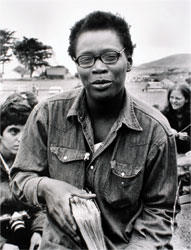
Alexis, girl,
There is nothing like being at home, huh? In your skin, with your work, in the universe, with us. Nothing like it. You have this question of finding, needing your own space while valuing radical socialization. You need other people somehow. But sometimes you really need your solitude (so you can socialize with us!) You and your older women!
Ask yourself how much stability and routine you need. Where are your boundaries? Where are your shared spaces? Where is your “room of ones’ own”? Are those many rooms? What is your practice? As you know, your own clarity and diligence around these things will free you from resenting the other people you invite into your life. Being your word also means being honest about what you need. As you are learning, your very body depends on it. But your body is not the only thing worth saving.
There are these children, and your relationships to them is crucial. It’s also a relationship to yourself. Your work to move towards intimacy is ultimately on their behalf. And ironically your boundaries (and waking up early) are what will allow you to be intimate and generous with yourself. Think about Maura. This intentional self-care and intimacy is a queer practice that allow intimacy that is not “self-sacrifice.” And we have yet to fully achieve it. And we are watching you.
Love and then some,
Pat
And my ancestors are socialist, so of course they would ask me to share these intimate insights and gifts with you. Of course they would want me to bring their messages to your waiting ears, but more than that I want to share this practice and encourage that you engage it for yourself.
I don’t know what ancestors speak to you or why and when they do, but I have been asked to ask you to listen, lovingly for what the universe wants you to know.
Can you join me? Think of the people who have influenced you, while they were living or through their written, or retold legacies. Just think about them and let your mind relax, let their energy surround and fill you. Create quiet times in your days in case they have something to say.
I encourage you to add your insights here on the “your letters” page if your feel that what you have received could provide healing and wisdom for the rest of us. I encourage you keep your writings for yourself if you feel that they should remain private. The messages of our living dead are sacred. They transcend the norms of intellectual property, and they should be treasured by your best impulse.
My intention here is to share with you an abiding sustaining faith in presence of those who have gone before and their participation in our everyday.
I invite your observance or participation with love.
Always,
alexis
Tuesday, February 03, 2009
Get Hip and Get Some Free Poetry in Your Life!
Greetings lovers of poetry, art, and culture!
Betty's Daughter Arts Collaborative is now accepting poetry, residency, and performance bookings for Black History, Women's History, and National Poetry Months.
If your organization, non or for profit, is located in New York and California, as well as in Atlanta, Chicago, Detroit, Houston, Seattle, New Orleans, Tucson, and Washington D.C, you are in luck! Poets & Writers, an organization dedicated to bringing literary arts to communities across the country, will help pay the honorarium. Just visit http://www.pw.org/funding for more information.
Here is a short list of what I can offer:
1. Residencies: Poetry, Spoken Word, Performance Poetry, Experimental and Community-Based Performance
2. Readings: Poetry, New Works, Performance Works (original works)
3. Workshops: 1 hr, 1 1/2 hrs
4. Combos: Performance and Workshop
5. Teacher/ Artist Trainings: 1 hr, 1 1/2 hrs
Visit
http://bettysdaughterarts.synthasite.com/a-poetics-of-process.php for teaching philosophy and sample lesson plan.
Bio:
Ebony Noelle Golden is the daughter of Pearl Glover, Bertha Sims and Betty Sims. She is a native of Houston, TX. Ebony holds a BA in English Literature and Poetry from Texas A & M University an MFA in Poetry from American University and a MA in Performance Studies from New York University. Ebony is an artist and cultural worker who has been awarded grants from the Atlantic Center for the Arts, Fund for Southern Communities, North Carolina A & T University and New York University. She has been published by Black Issues and Books Review, American Book Review, Obsidian, Pluck, and Third World Press. Ebony serves as the creative director of Betty’s Daughter Arts Collaborative, a boutique arts consulting group, based in NYC and NC. Her current projects include, “Gumbo Ya/Ya or This is Why We Speak in Tongues”, Images: for Younger SiStars, The Community Writing Intensive, i hear you breathing for me/ an embodied blues for meagan williams (multi-media performance) and “again, the water carriers” (a full length book of poetry). Ebony’s work is informed by her ancestral and spiritual family, guides, and homes, primarily. She can be reached at bettysdaughterarts@gmail.com or ww.bettysdaughterarts.synthasite.com.
Betty's Daughter Arts Collaborative looks forward to working with you to create "radical expressiveness in community".
Yours truly in the arts,
Betty's Daughter Arts Collaborative
www.bettysdaughterarts.synthasite.com
www.iamnotaproject.wordpress.com
Greetings lovers of poetry, art, and culture!
Betty's Daughter Arts Collaborative is now accepting poetry, residency, and performance bookings for Black History, Women's History, and National Poetry Months.
If your organization, non or for profit, is located in New York and California, as well as in Atlanta, Chicago, Detroit, Houston, Seattle, New Orleans, Tucson, and Washington D.C, you are in luck! Poets & Writers, an organization dedicated to bringing literary arts to communities across the country, will help pay the honorarium. Just visit http://www.pw.org/funding for more information.
Here is a short list of what I can offer:
1. Residencies: Poetry, Spoken Word, Performance Poetry, Experimental and Community-Based Performance
2. Readings: Poetry, New Works, Performance Works (original works)
3. Workshops: 1 hr, 1 1/2 hrs
4. Combos: Performance and Workshop
5. Teacher/ Artist Trainings: 1 hr, 1 1/2 hrs
Visit
http://bettysdaughterarts.synthasite.com/a-poetics-of-process.php for teaching philosophy and sample lesson plan.
Bio:
Ebony Noelle Golden is the daughter of Pearl Glover, Bertha Sims and Betty Sims. She is a native of Houston, TX. Ebony holds a BA in English Literature and Poetry from Texas A & M University an MFA in Poetry from American University and a MA in Performance Studies from New York University. Ebony is an artist and cultural worker who has been awarded grants from the Atlantic Center for the Arts, Fund for Southern Communities, North Carolina A & T University and New York University. She has been published by Black Issues and Books Review, American Book Review, Obsidian, Pluck, and Third World Press. Ebony serves as the creative director of Betty’s Daughter Arts Collaborative, a boutique arts consulting group, based in NYC and NC. Her current projects include, “Gumbo Ya/Ya or This is Why We Speak in Tongues”, Images: for Younger SiStars, The Community Writing Intensive, i hear you breathing for me/ an embodied blues for meagan williams (multi-media performance) and “again, the water carriers” (a full length book of poetry). Ebony’s work is informed by her ancestral and spiritual family, guides, and homes, primarily. She can be reached at bettysdaughterarts@gmail.com or ww.bettysdaughterarts.synthasite.com.
Betty's Daughter Arts Collaborative looks forward to working with you to create "radical expressiveness in community".
Yours truly in the arts,
Betty's Daughter Arts Collaborative
www.bettysdaughterarts.synthasite.com
www.iamnotaproject.wordpress.com
Thursday, January 29, 2009
Where is the Love?: Eternal Summer of the Black Feminist Mind Session II
In 1978 at the 4th Annual Conference of Afro-American Writers at Howard University, June Jordan facilitated a historic and controversial panel on "Black Women Writers and Feminism." The talk that she presented "Where is the Love?" defined black feminism as a crucial act of love. Met with some hostility and homophobia from the audience, the talk was later published in Essence Magazine and remains a generations primary interface with what black feminism might mean.
More than 30 years later we are still working through what it means to create community and transformation through a radical understanding of love. Join BrokenBeautiful Press and SpiritHouse for a discussion of this important essay!
In Durham we will be gathering at 1pm on Saturday February 7th.
The essay is available for free download at :http://blackfeministmind.wordpress.com/2009/01/29/where-is-the-love-session-ii/
Feel free to read along and gather wherever you are!
love,
lex
More than 30 years later we are still working through what it means to create community and transformation through a radical understanding of love. Join BrokenBeautiful Press and SpiritHouse for a discussion of this important essay!
In Durham we will be gathering at 1pm on Saturday February 7th.
The essay is available for free download at :http://blackfeministmind.wordpress.com/2009/01/29/where-is-the-love-session-ii/
Feel free to read along and gather wherever you are!
love,
lex
Wednesday, January 28, 2009
Gumbo YaYa "Sista Circle" Continues with
"Mother. Ourselves" Interactive Workshop led by Alexis Pauline Gumbs and
Zachari Curtis (3:00-5:30)
Contact: Betty's Daughter Arts Collaborative
Media Alert
bettysdaughterarts@gmail.com www.bettysdaughterarts.synthasite.com
Durham, NC- Jan. 28, 2009
The North Carolina Humanities Council and SpiritHouse-NC sponsor a creative healing and expression process for women and girls of the African diaspora Durham, NC. The 12-week process, Gumbo YaYa, began January 4 and will continue to March 29 with a creative performance. Now in its second month, Gumbo Yaya continues to incorporate methods for growth,expression, and community-building to actualize individual and artistic processes. The theme is "Love is Radical: Approaches to Mothering, Daughter(ing), and Sister(ing)".
Up-coming Sister Circles Include
Feb. 1, "Mother. Ourselves." with Alexis Pauline Gumbs and Zachari Curtis.
Feb. 8, "In The Beginning Was Her Word: Empowering Women One Story At A Time", with Dr. Anjail Rashida Ahmad.Feb. 15, "The Healing Practice of Dance"
Feb. 22, "Meditation and Creative Visioning: Building Intergenerational Bridges Among Black
Women and Girls"
The "sista circle" uses methods such as improvisation, dance, journaling, meditation, storytelling, photography, theater, poetry, and music to explore the intergenerational relationships between black mothers, daughters, and sisters. The "sista circle" series culminates in multimedia theater performance at the end of March.
All sessions, materials, performances, and discussions are free for participants and audience members. Gumbo YaYa will provide child care and dinner during every "sista circle". Participants do not have to be students, or affiliated with any particular institution to participate.
Ebony Noelle Golden, Creative Director of Gumbo YaYa thanks the North Carolina Humanities Council, SpiritHouse-NC, and Healing with CAARE, Inc. for their generous sponsorship. Nancy "Mama Nia" Wilson, Executive Director of SpiritHouse-NC said, "We are really looking forward to hosting Gumbo YaYa. This process will definitely help to continue conversations black women and girls are having about how we relate to each other. We hope this process helps mothers, daughters, and sisters strengthen their relationships with each other and the larger communities."
For more information about Gumbo YaYa visit www.iamnotaproject.wordpress.com, or email bettysdaughterarts@gmail.com.
--
Ebony N. Golden, MFA, MA
Creative Director
bettysdaughterarts.synthasite.com
Hire Betty's Daughter for your arts consulting needs!
"creating radical expressiveness in community"
Check out...Gumbo Yaya/or this is why we speak in tongues
"Creative Healing and Expression for Women of the Diaspora"
www.iamnotaproject.wordpress.com
"Mother. Ourselves" Interactive Workshop led by Alexis Pauline Gumbs and
Zachari Curtis (3:00-5:30)
Contact: Betty's Daughter Arts Collaborative
Media Alert
bettysdaughterarts@gmail.com www.bettysdaughterarts.synthasite.com
Durham, NC- Jan. 28, 2009
The North Carolina Humanities Council and SpiritHouse-NC sponsor a creative healing and expression process for women and girls of the African diaspora Durham, NC. The 12-week process, Gumbo YaYa, began January 4 and will continue to March 29 with a creative performance. Now in its second month, Gumbo Yaya continues to incorporate methods for growth,expression, and community-building to actualize individual and artistic processes. The theme is "Love is Radical: Approaches to Mothering, Daughter(ing), and Sister(ing)".
Up-coming Sister Circles Include
Feb. 1, "Mother. Ourselves." with Alexis Pauline Gumbs and Zachari Curtis.
Feb. 8, "In The Beginning Was Her Word: Empowering Women One Story At A Time", with Dr. Anjail Rashida Ahmad.Feb. 15, "The Healing Practice of Dance"
Feb. 22, "Meditation and Creative Visioning: Building Intergenerational Bridges Among Black
Women and Girls"
The "sista circle" uses methods such as improvisation, dance, journaling, meditation, storytelling, photography, theater, poetry, and music to explore the intergenerational relationships between black mothers, daughters, and sisters. The "sista circle" series culminates in multimedia theater performance at the end of March.
All sessions, materials, performances, and discussions are free for participants and audience members. Gumbo YaYa will provide child care and dinner during every "sista circle". Participants do not have to be students, or affiliated with any particular institution to participate.
Ebony Noelle Golden, Creative Director of Gumbo YaYa thanks the North Carolina Humanities Council, SpiritHouse-NC, and Healing with CAARE, Inc. for their generous sponsorship. Nancy "Mama Nia" Wilson, Executive Director of SpiritHouse-NC said, "We are really looking forward to hosting Gumbo YaYa. This process will definitely help to continue conversations black women and girls are having about how we relate to each other. We hope this process helps mothers, daughters, and sisters strengthen their relationships with each other and the larger communities."
For more information about Gumbo YaYa visit www.iamnotaproject.wordpress.com, or email bettysdaughterarts@gmail.com.
--
Ebony N. Golden, MFA, MA
Creative Director
bettysdaughterarts.synthasite.com
Hire Betty's Daughter for your arts consulting needs!
"creating radical expressiveness in community"
Check out...Gumbo Yaya/or this is why we speak in tongues
"Creative Healing and Expression for Women of the Diaspora"
www.iamnotaproject.wordpress.com
Wednesday, January 21, 2009
Greetings Gumbo YaYa Supporters,
Last week's session "Brilliant Tomorrows: Sister(ing) as Communal Creative Performance" was a success! We had 20 women in attendance as we engaged diverse ways of practicing sisterhood.
This sunday features an extended gourd making and percussion workshop, HandWork to HeartWork" led by Connie Leeper of Kannapolis, NC. The session will begin at 2:30 and end 6:30. All programs happen at Healing with CAARE, Inc on 214 Broadway St in Durham, NC.
We are also pleased to announce that two of our youth, Nadirah and Bryonna, will lead us in a meditation and visualization activity to start the workshop.
As always, dinner and child care will be provided.
Additionally, please see the link to more pictures of the Everlasting Life workshop from our second week. Thank you sister Courtney Powell-X for the photography work.
http://picasaweb.google.com/sis.courtney/GumboYaya?authkey=vLMkbfNO_IU#5293620404058243410
Please visit www.iamnotaproject.wordpress.com and leave us a note!
Last week's session "Brilliant Tomorrows: Sister(ing) as Communal Creative Performance" was a success! We had 20 women in attendance as we engaged diverse ways of practicing sisterhood.
This sunday features an extended gourd making and percussion workshop, HandWork to HeartWork" led by Connie Leeper of Kannapolis, NC. The session will begin at 2:30 and end 6:30. All programs happen at Healing with CAARE, Inc on 214 Broadway St in Durham, NC.
We are also pleased to announce that two of our youth, Nadirah and Bryonna, will lead us in a meditation and visualization activity to start the workshop.
As always, dinner and child care will be provided.
Additionally, please see the link to more pictures of the Everlasting Life workshop from our second week. Thank you sister Courtney Powell-X for the photography work.
http://picasaweb.google.com/sis.courtney/GumboYaya?authkey=vLMkbfNO_IU#5293620404058243410
Please visit www.iamnotaproject.wordpress.com and leave us a note!
Sunday, January 11, 2009
Greetings Gumbo YaYa Supporters,
Below you will find upcoming Sister Circle information. Please forward to Black women and girls you think may be interested in coming.
As with all circles, refreshments and child care are provided.
For more information, visit www.iamnotaproject.wordpress.com or bettysdaughterarts@gmail.com
Jan. 18. “Brilliant Tomorrows: Sister(ing) as Communal Creative Performance”
Ebony Noelle Golden
Workshop Description- How are black women taught to sister? What are the some of the rites, rituals, and performances of sistering? How can we honor the space and practice of sistering? In this session, participants will engage in poetry, performance, music, and movement activities that help us create a vocabulary for active, present, and radical sistering.
The workshop is informed by the work and scholarship of Alice Coltrane, Romare Bearden, Ntozake Shange, Augosto Boal, Anna Deveare Smith, Nina Simone, Zora Neale Hurston, Soyini Madison, among others.
Jan. 25 “HandWork to HeartWork” Gourd Making & Percussion Connie Leeper
On the surface, this workshop is about music and gourd making. On a deeper level, it is more about connection…connection to ourselves, playfulness, imagination, culture, health and community. No experience necessary. Must be willing to be open, welcoming & ready to learn and teach. This workshop only requires that you bring your whole self into a process of intentional creativity.
Feb. 1 “Mother. Ourselves.” Alexis Pauline Gumbs & Zachari Curtis What happens when a life’s work stretches to include many lifetimes and multiple bodies? What models of communication allow those of us living in the flesh on this plane to access the imperatives of ancestors and the unborn? This exploration of the practice of spiritual daughterhood demonstrates and investigates radical connection as a calling and a strategy for healing and action.
Presented by three spiritual daughters of Durham visionary artist, educator and now ancestor Nayo Watkins, “Mother. Ourselves.” is both a performative tribute to Mama Nayo’s life and energy and a model for communication across the presumed limits of life itself. Mama Nayo understood the necessity of the creative process to radical political struggle and healing. This is how she lives with us now; reaching forward and back, moving away and drawing us together.
Time, distance, dis(ease), death, scarcity if asserted as essential, linear, terminal, logical, confine individuals and disrupt communication across seemingly impermeable barriers. What we know already is that we already have everything we need in order to reclaim, remember, revision ourselves, together, free. As Nayo put it, “You already know all you need to know… It’s in your bones.”
Feb. 8 “In The Beginning Was Her Word: Empowering Women One Story At A Time”
Dr. Anjail Rashida Ahmad
Over the millennia, women have held societies together word of mouth, hand to hand and vision by vision simply by the words issued from their tongues. The word or the power of one’s intention spoken into existence is the essence of who we are and can be a force that drives the unfolding of our life experiences. This speaking often takes the shape of stories both narrative and poetic. It’s the power of one’s own story articulated and shared that can have a most transforming effect throughout our societies both private and public.
In this workshop, Dr. Ahmad will lead us in uncovering the essence of the words lying at the bottom of our own hearts and use them to formulate our stories/poems/womanifestas-what desires to be spoken that has not yet been uttered.
Participants should bring a photograph of themselves preferably from the remote past. Use black and white if you have it or copy with a black and white copier. Together we will write autobiographically/biographically, herstorically inspired poems. Come prepared to be reaffirmed, to search-out the words and images, to gather and shape them and to share that which has the power to make us whole.
Below you will find upcoming Sister Circle information. Please forward to Black women and girls you think may be interested in coming.
As with all circles, refreshments and child care are provided.
For more information, visit www.iamnotaproject.wordpress.com or bettysdaughterarts@gmail.com
Jan. 18. “Brilliant Tomorrows: Sister(ing) as Communal Creative Performance”
Ebony Noelle Golden
Workshop Description- How are black women taught to sister? What are the some of the rites, rituals, and performances of sistering? How can we honor the space and practice of sistering? In this session, participants will engage in poetry, performance, music, and movement activities that help us create a vocabulary for active, present, and radical sistering.
The workshop is informed by the work and scholarship of Alice Coltrane, Romare Bearden, Ntozake Shange, Augosto Boal, Anna Deveare Smith, Nina Simone, Zora Neale Hurston, Soyini Madison, among others.
Jan. 25 “HandWork to HeartWork” Gourd Making & Percussion Connie Leeper
On the surface, this workshop is about music and gourd making. On a deeper level, it is more about connection…connection to ourselves, playfulness, imagination, culture, health and community. No experience necessary. Must be willing to be open, welcoming & ready to learn and teach. This workshop only requires that you bring your whole self into a process of intentional creativity.
Feb. 1 “Mother. Ourselves.” Alexis Pauline Gumbs & Zachari Curtis What happens when a life’s work stretches to include many lifetimes and multiple bodies? What models of communication allow those of us living in the flesh on this plane to access the imperatives of ancestors and the unborn? This exploration of the practice of spiritual daughterhood demonstrates and investigates radical connection as a calling and a strategy for healing and action.
Presented by three spiritual daughters of Durham visionary artist, educator and now ancestor Nayo Watkins, “Mother. Ourselves.” is both a performative tribute to Mama Nayo’s life and energy and a model for communication across the presumed limits of life itself. Mama Nayo understood the necessity of the creative process to radical political struggle and healing. This is how she lives with us now; reaching forward and back, moving away and drawing us together.
Time, distance, dis(ease), death, scarcity if asserted as essential, linear, terminal, logical, confine individuals and disrupt communication across seemingly impermeable barriers. What we know already is that we already have everything we need in order to reclaim, remember, revision ourselves, together, free. As Nayo put it, “You already know all you need to know… It’s in your bones.”
Feb. 8 “In The Beginning Was Her Word: Empowering Women One Story At A Time”
Dr. Anjail Rashida Ahmad
Over the millennia, women have held societies together word of mouth, hand to hand and vision by vision simply by the words issued from their tongues. The word or the power of one’s intention spoken into existence is the essence of who we are and can be a force that drives the unfolding of our life experiences. This speaking often takes the shape of stories both narrative and poetic. It’s the power of one’s own story articulated and shared that can have a most transforming effect throughout our societies both private and public.
In this workshop, Dr. Ahmad will lead us in uncovering the essence of the words lying at the bottom of our own hearts and use them to formulate our stories/poems/womanifestas-what desires to be spoken that has not yet been uttered.
Participants should bring a photograph of themselves preferably from the remote past. Use black and white if you have it or copy with a black and white copier. Together we will write autobiographically/biographically, herstorically inspired poems. Come prepared to be reaffirmed, to search-out the words and images, to gather and shape them and to share that which has the power to make us whole.
Saturday, January 10, 2009
Please Sign!
To: The Academy of Motion Picture Arts and SciencesThis petition has been launched to object to the Academy of Motion Picture Arts and Sciences' announcement that it will give Jerry Lewis its Jean Hersholt Humanitarian Award at the Oscar Awards ceremony on February 22, 2009.
During his decades of hosting the Labor Day Telethon, Jerry Lewis has helped to perpetuate negative, stereotypical attitudes toward people with muscular dystrophy and other disabilities. Jerry Lewis and the Telethon actively promote pity as a fundraising strategy. Disabled people want RESPECT and RIGHTS, not pity and charity.
In 1990, Lewis wrote that if he had muscular dystrophy and had to use a wheelchair, he would "just have to learn to try to be good at being a half a person." During the 1992 Telethon, he said that people with MD, whom he always insists on calling "my kids," "cannot go into the workplace. There's nothing they can do." Comments like these have led disability activists and our allies to protest against Jerry Lewis. We've argued that he uses the Telethon to promote pity, a counterproductive emotion which undermines our social equality. Here's how Lewis responded to the Telethon protesters during a 2001 television interview: "Pity? You don't want to be pitied because you're a cripple in a wheelchair? Stay in your house!"
Jerry Lewis has also made derogatory comments about women and gay men. His outdated attitudes and crude remarks are dehumanizing, not humanitarian.
Therefore, we the undersigned support the actions and arguments of the coalition group The Trouble with Jerry. We protest the Academy's characterization of Jerry Lewis as a "humanitarian." And we ask that the Academy cancel its plans to give Lewis the Hersholt Humanitarian Award.Sincerely,
View Current Signatures
Tuesday, January 06, 2009
Get Hip and Get Your Necessary Dose of Gumbo YaYa!
January 5, 2009 –A New Year and new process to get the job done
On this new show in the New Year, we talk about upcoming events and setting goals for 2009.
Phyllis Coley, editor of Spectacular magazine and Ebony Noelle Golden creative director of Gumbo Yaya gives us a lot of new information to think about. Phyllis shares info on the upcoming Jan 31 celebration of Martin Luther King in Durham. Ebony tells us about the weekly sisterhood circles that she is guiding. Each of my guests use a process unique to them that I know you will find interesting and can be used as a guide to strengthen your own goals in 2009. Join the conversation and send me your goals that you have set for 2009.
Visit at www.richardbrownshow.com to listen to and download the podcast.
Visit Gumbo YaYa at www.iamnotaproject.wordpress.com
January 5, 2009 –A New Year and new process to get the job done
On this new show in the New Year, we talk about upcoming events and setting goals for 2009.
Phyllis Coley, editor of Spectacular magazine and Ebony Noelle Golden creative director of Gumbo Yaya gives us a lot of new information to think about. Phyllis shares info on the upcoming Jan 31 celebration of Martin Luther King in Durham. Ebony tells us about the weekly sisterhood circles that she is guiding. Each of my guests use a process unique to them that I know you will find interesting and can be used as a guide to strengthen your own goals in 2009. Join the conversation and send me your goals that you have set for 2009.
Visit at www.richardbrownshow.com to listen to and download the podcast.
Visit Gumbo YaYa at www.iamnotaproject.wordpress.com
Monday, January 05, 2009
Because We Still Are Here: Radical Women of Color in Solidarity with Palestine
Mai'a Williams and Alexis Pauline Gumbs invite you to participate in a new website documenting and continuting the solidarity of women of color in the United States with the people of Palestine.
email brokenbeautifulpress@gmail.com with any statements of solidarity or documentations of solidarity in action that you would like to share. below is an a excerpt from the site.
www.becausewestillarehere.wordpress.com
we still are here
with our words and with our actions.
on January 3rd, 2009 UBUNTU a women of color/survivor led coalition in Durham North Carolina organized a vigil in solidarity with the people of Gaza. Here are some captioned images from the event.
(photos by Ajamu Dillahunt)

Rachael Derello, the organizer who first voiced the need for a vigil in Durham, sings "We Shall Be Released"

Manju Rajendran, one of the main organizers who MC'd the event reminds the crowd of the need for aid and medical supplies inside blockaded Gaza.

Alexis Pauline Gumbs, Racheal Derello and Kriti Sharma (speakers from UBUNTU) listen as Laylah Haddad describes the violence her family is experiencing in Gaza due to the Isreali bombings.

Laylah Haddad told the crowd that her cousins witnessed children bombed to death while playing dice in front of their home in Gaza.

Theresa El-Amin formerly of SNCC and currently organizing with Solidarity reminded the crowd that the City of Durham had once divested from all connections to Apartheid South Africa and must now divest from the Isreali Aparthied state.

Nadeen Bir and Kifu Faruq hold signs reminding us that "Until Palestine is Free, None of Us Are Free"...and connecting the occupation of Palestine and the occupation of Iraq.

And the little ones raise their voices.
other coverage of the Durham event
http://raleighfist.wordpress.com/2009/01/04/durham-protests-gaza-bombings/
Subscribe to:
Posts (Atom)