I am writing these words as a route map
an artifact for survival...
History is not kind to us
we restitch it with living
past memory forward
into desire
into the panic articulation
of want without having
or even the promise of getting.
And I dream of our coming together
encircled driven
not only by love
but by lust for a working tomorrow
the flights of this journey
mapless uncertain
and necessary as water.
-Audre Lorde
"On My Way Out I Passed Over You
and the Verrazano Bridge"
Monday, October 27, 2008


October 27, 2008
Gumbo YaYa/ or this is why we speak in tongues travels~~~~south!
It is that time, again. Last year Gumbo YaYa/ or this is why we speak in tongues worked magic in NYC. Almost a year to date, I sent out this email to women for support of this so fresh and so necessary improvisational, sista-circle, healing, performance opportunity.
I am Ebony Golden currently living in Manhattan and working as an arts consultant and performer. Over the last year, I had the wonderful pleasure of working with a beautiful group of women who helped me think through what Womanist Performance Methodology and Practice is about. I had the opportunity to study with, learn from, and make trouble with some of the flyest sistas around. We honored ourselves. We were able to be honest. And we participated as we could. I would not have graduated without them.
I add these sistas to my infinitely growing family of sistas around the country. I am so blessed to work and dream with you all. Thank you Ayanna, Geneva, Joi, Cammile, Chelsea, RonAmber, Crystal, Tonya, Samantha, and everyone else who participated along with the rest of my family in DC, TX, GA, NC, IL CA, LA, and in other spaces. You hold me up, thank you.
It is time to begin the 2nd cycle of Gumbo YaYa! Through the generous funding and support of SpiritHouse-NC, North Carolina Humanities Council, Healing with CAARE the 2nd cycle will happen in Durham, NC.
I am dedicated to my healing, the healing of the women in my family and extended family, and the world. This is a process we are creating everywhere, let's continue to tap in together and see what shifts.
This process will have a few opportunities for performance, live and virtual, but mostly I am interested in articulating a poetics of womanist performance process and methodology that can be reproduced by us every where to heal ourselves and this world.
NEED
1- Intern interested in arts management, performance, grassroots activism, media relations, and social justice. Applicant must be flexible, a self-starter, and dependable. Applicant must be based in Durham-NC (or close by). Course credit and possible stipend available.
NEED
Women and girls to participate. If you know of a school, community center, or pre-existing program who might be interested in collaborating, let me know.
NEED
I need you to tell our story. A small group of sistas who are not afraid to undertake this work with me, whether they understand exactly where it is headed or not. Sistas who enjoy movement, music, writing, photography, people, good food, performing, making a fuss about us (black women), and who are not afraid to say we (black women) matter anywhere in this world.
NEEDS
1. sistas to perform several times during a 12-week period and beyond
2. videographer/ photographer/ editor
3. choreographer
4. stage manager
5. 'zine designer
6. web designer
NEEDS
1. voice recorders, tapes
2. gift cards (Target would be excellent)
3. performance space
4. video recorders, tapes, dvd
5. money, frequent flyer miles, train tickets, gas cards!!!
did I say money? oh, and money!
NEEDS
Your stories. Some of you are far away from me right now. But I would love to interview you about you and your healing process. Let's set up some time for phone interviews. I travel often, and maybe we can get together and talk.
Every one is invited to NC in March 09 to see a pivotal step in this journey. Can't wait.
Please take a look at the updated web site and leave poems, videos, letters, and words of encouragement on the Poetic Healing page.
Please do not hesitate to contact me with any questions.
Cool Spirits and Calm Waters,
--
Ebony N. Golden, MFA, American University
Performance Studies MA, NYU
Gumbo Yaya/or this is why we speak in tongues
Creative Director
www.iamnotaproject.wordpress.com
Thursday, October 23, 2008
TechnoAfroCats Read Wild Seed

Hear ye, Hear ye:
A message to all members of Quirky Black Girls
Hey all,
Just a quick note to let everyone know that the fabulous long-distance sci-fi reading group at Quirky Black Girls will be reading Octavia Butler's Wildseed and discussing it in a forum right here on qbg!
So go get the book from your public library or independent bookseller or half.com or whatever and look for details on the main site.
Also If you haven't copped the new Muhsinah or The Foreign Exchange you are missing out! To check out her sound, see qbg Jah's video post of "construction" in the videos section.
Also shouts out to our growing international qbg contingent!
love,
QBG
Visit Quirky Black Girls at: http://quirkyblackgirls.ning.com
Wednesday, October 22, 2008
Until...
There are those, bright and visible among us, who believe in a Queer Renaissance...that we can make the world anew by loving transformation with our every action, by building our wishes into place to live, by writing our dreams in deep red pen on every wall that faces us. There are those among us who thread the present into 50 ways to reimagine life at once, teasing the future with incrementally wilder ways to be present. Queer black filmmaker, poet, thinker Julia R. Wallace is one of those.
I'm a fan. (Can you tell?)
As an outgrowth of the collaborative online community transformation venture Queer Renaissance (www.queerrenaissance.com), and a compelling poetic filmic vision, Julia Wallace is creating Until, a poem crystallized into a short experimental narrative film about friendship, love, secrecy, shame and the possibility of freedom. And I want you to know about it. Because I love you.
After hearing the poem and reading the screenplay for Until I already have a crush on the main character. Pro, a quiet loving earnest college student wants the best for her best friend Hailey. And she's thrilled and gratified when after facing rejection from some guy on campus, Hailey wants her. As always though, it gets complicated when the lights turn on. What will it take for each woman to be true to herself in private and in public?
Y'all, reading this screenplay makes me want to be a better braver person. It scrapes up those moments when we choose our fears over each other, and when we choose each other out of fear...it makes me want to build altars and monuments to those public hand holdings and private yeses that risk everything except our integrity. And to those moments when we almost get there.
There should be a billion films like this, but there aren't, and Julia and the crew are shooting next weekend in Atlanta so go here to find out more about Until and how you can support that necessary process of making our love, our questions, our hope and our process visible and tangible.
love always,
lex
I'm a fan. (Can you tell?)
As an outgrowth of the collaborative online community transformation venture Queer Renaissance (www.queerrenaissance.com), and a compelling poetic filmic vision, Julia Wallace is creating Until, a poem crystallized into a short experimental narrative film about friendship, love, secrecy, shame and the possibility of freedom. And I want you to know about it. Because I love you.
After hearing the poem and reading the screenplay for Until I already have a crush on the main character. Pro, a quiet loving earnest college student wants the best for her best friend Hailey. And she's thrilled and gratified when after facing rejection from some guy on campus, Hailey wants her. As always though, it gets complicated when the lights turn on. What will it take for each woman to be true to herself in private and in public?
Y'all, reading this screenplay makes me want to be a better braver person. It scrapes up those moments when we choose our fears over each other, and when we choose each other out of fear...it makes me want to build altars and monuments to those public hand holdings and private yeses that risk everything except our integrity. And to those moments when we almost get there.
There should be a billion films like this, but there aren't, and Julia and the crew are shooting next weekend in Atlanta so go here to find out more about Until and how you can support that necessary process of making our love, our questions, our hope and our process visible and tangible.
love always,
lex
Friday, October 17, 2008
Southern Feminism Alive and Thriving: The Charis Review
Hey all,
The Charis Review is an awesome publication born out of the oldest feminist bookstore in the South (which also happens to be the place where I was born into a writer.) The current issue features an interactive on the SONG storysharing project, an awesome piece on "bad poetry" by Dorothy Allison, a beautiful meditation by Shay Youngblood, advice and musings on pasties by Atlanta's most fabulous burlesque dancers, recipies, tomato seed saving advice, stencils, coloring mandala's and more! So get down with it!
So below is the call for submissions. Check out the link on the Circle website: http://www.chariscircle.org/charis_review/charis_review_september_08.html also if anyone wants to buy it online they can do so here http://charis.booksense.com/NASApp/store/IndexJsp?s=newsletter
Charis Review
Call for Submissions (or, How to Become a Charis Review Contributor) :
What do we want?
The Charis Review is a multi-media, multi-generational southern feminist response to culture. It is founded on the belief that sharing knowledge is a feminist principle and that swapping stories is an intrinsic aspect of Southern culture. We believe in the value of all forms of culture and media: "high," "low" and everything in between. This means we want both your poetry and your recipes, your critical essays and your stencils, we are interested in your skills, your passions, the knowledges and stories that enliven your communities and your homes.
Some kinds of things we are hoping to publish:
Fiction, Poetry, Essays, Recipes, Original Games, Paper dolls, How-to articles or drawings, Recommended reading lists, Book Reviews, Pop Culture Criticism, Artwork, Articles on how to be an ally, Anti-oppression organizing tips, Interviews, and more....
When do we want it?
Please send all submissions for our Winter Issue to elizabeth@chariscircle.org by no later than Dec. 1st, 2008.
Please share the love with your friends and community members. We are interested in showcasing the skills and stories of our overlapping communities. The more the merrier!
The Charis Review is an awesome publication born out of the oldest feminist bookstore in the South (which also happens to be the place where I was born into a writer.) The current issue features an interactive on the SONG storysharing project, an awesome piece on "bad poetry" by Dorothy Allison, a beautiful meditation by Shay Youngblood, advice and musings on pasties by Atlanta's most fabulous burlesque dancers, recipies, tomato seed saving advice, stencils, coloring mandala's and more! So get down with it!
So below is the call for submissions. Check out the link on the Circle website: http://www.chariscircle.org/
Charis Review
Call for Submissions (or, How to Become a Charis Review Contributor) :
What do we want?
The Charis Review is a multi-media, multi-generational southern feminist response to culture. It is founded on the belief that sharing knowledge is a feminist principle and that swapping stories is an intrinsic aspect of Southern culture. We believe in the value of all forms of culture and media: "high," "low" and everything in between. This means we want both your poetry and your recipes, your critical essays and your stencils, we are interested in your skills, your passions, the knowledges and stories that enliven your communities and your homes.
Some kinds of things we are hoping to publish:
Fiction, Poetry, Essays, Recipes, Original Games, Paper dolls, How-to articles or drawings, Recommended reading lists, Book Reviews, Pop Culture Criticism, Artwork, Articles on how to be an ally, Anti-oppression organizing tips, Interviews, and more....
When do we want it?
Please send all submissions for our Winter Issue to elizabeth@chariscircle.org by no later than Dec. 1st, 2008.
Please share the love with your friends and community members. We are interested in showcasing the skills and stories of our overlapping communities. The more the merrier!
Tuesday, October 14, 2008
Celebrate the Birth of Quirky Black Girls Magazine!

Quirky Black Girls is a network of fierce black women. We share our dreams, visions, and thoughts with you by producing the feminist publication QBG (Quirky Black Girls) Magazine, a quarterly ezine focusing on politics, cultural criticism, and social change. QBG Magazine features our art, poetry, fiction and nonfiction, and our ruminations on popular culture and social issues.
mission
QBG Magazine aims to provide a forum for Quirky Black Girls - and those who love them - where feminist dialog is the only norm and following your truth is the the only rule.
QBG Manifesta
Because Audre Lorde looks different in every picture ever taken of her. Because Octavia Butler didn't care. Because Erykah Badu is a patternmaster. Because Macy Gray pimped it and Janelle Monae was ready.
Resolved. Quirky black girls wake up ready to wear a tattered society new on our bodies, to hold fragments of art, culture and trend in our hands like weapons against conformity, to walk on cracks instead of breaking our backs to fit in the mold.
We're here, We're Quirky, Get used to it!
.... Quirky Black girls don't march to the beat of our own drum; we hop, skip, dance, and move to rhythms that are all our own. We make our own drums out of empty lunchboxes, full imaginations and number 3 pencils.
Quirky Black girls are not quirky because they like white shit; rather they understand that because they like it, it is not the sole province of whiteness.
Quirky black girls are the answer to the promise that black means everything, birthing and burning a new world every time.
Sound it out. Quirky, like queer and key, different and priceless, turning and open. Black, not be lack but black one word shot off the tongue like blap, bam, black. Girl, like the curl in a hand turning towards itself to snap, write, hold or emphasize. Quirky. Black. Girl. You see us. Act like you know.
We demand that our audiences say "yes-sir-eee" if they agree and we answer our own question "What good do your words do, if they don't understand you?" by speaking anyway, even if our words are "bruised and misunderstood."
Quirky black girls are hot!
Whether you're ready to see it or not.
Quirky means rejecting a particular type of "value," a certain unreadiness for consumption and subsumption in an economy of black heterocapital. This means that Quirky Black Girls act independently of dominant social norms or standards of beauty. So fierce that others may not be able to appreciate us just yet.
No matter what age we are, we hold onto that girlhood drive for adventure, love for friends, independent spirit, wacky sense of humor, and hope for the future.
Quirky Black Girls resist boxes in favor of over lapping circles with permeable membranes that allow them to ebb and flow through their multiple identities.
Quirky Black Girls- Embrace the quirky!
Sunday, October 05, 2008
Combahee Survival: Black Feminism Lives!!!!
Check out the Combahee Survival Project at www.combaheesurvival.wordpress.com!
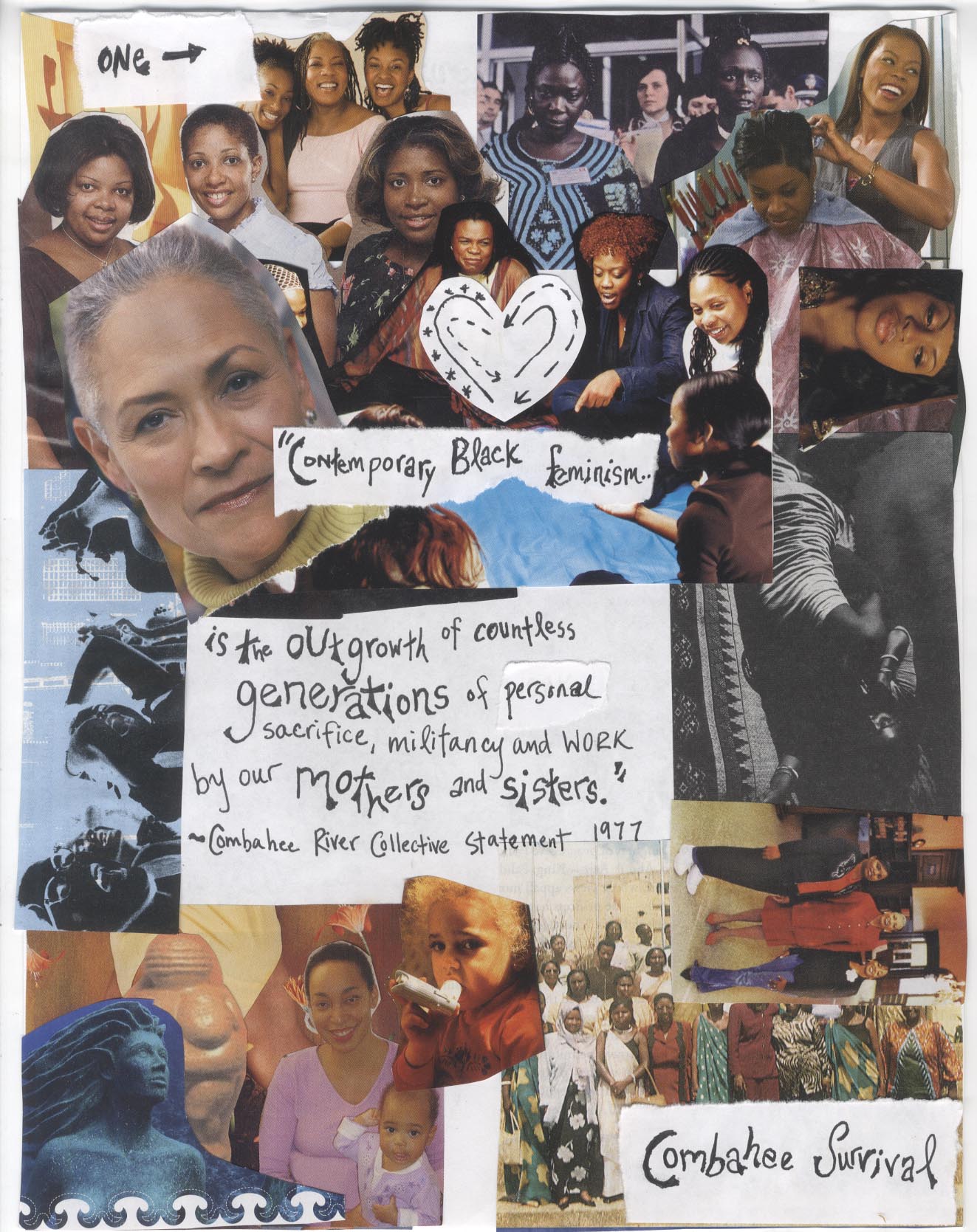
Check out the Combahee Survival Project at www.combaheesurvival.wordpress.com!
We were never meant to survive. None of us. We were never meant to find each other, love each other, remember the warriors that came before. We were never meant to know these histories. We were never meant to turn our trauma into a map for transformation. We were never meant to survive. But we do it anyway. Break it down. Sur viv al. Life underneath waiting to embrace all of us. Survival is a poem written in a corner, found waiting in a basement, forgotten. Survival is when the timeliness of your word is more important than the longevity of one body. Survival is spirit connected through and past physical containers. Survival is running for your life and then running for Albany city council without consenting to the State. Survival is shaping change while change shapes you. Survival means refusing to believe the obvious. Survival means remembering the illegal insights censored in the mouths of our mothers. Survival is quilt patterns, garden beds. Survival means growing, learning, working it out. Survival is a formerly enslaved black woman planning and leading a battle that freed 750 slaves from inside an institution called the United States Military. Survival is out black lesbians creating a publishing movement despite an interlocking system of silences. Survival is a group of black women recording their own voices, remembering a river, a battle, a warrior and creating a statement to unlock the world. Survival is like that. We were never meant to survive. And we can do even more. This booklet moves survival to revival, like grounded growth, where seeds seek sun remembering how the people could fly. We are invoking the Combahee River Collective Statement and asking how it lives in our movement now. And the our and the we are key to this as individual gains mean nothing if others suffer. We were never meant to survive but we will thrive. We want roundness and wholeness, where everyone eats and has time to be creative has time to just be, What tools does it give that are necessary to our survival? What gaps does it leave us to lean into? Black feminism lives, but the last of the originally organized black feminist organizations in the United States were defunct by 1981. Here we offer and practice a model of survival that is spiritual and impossible and miraculous and everywhere, sometimes pronounced revival. Like it says on the yellow button that came included in the Kitchen Table Press pamphlet version of The Combahee River Collective Statement in 1986 "Black Feminism LIVES!" And therefore all those who were never meant to survive blaze open into a badass future anyway. Meaning something unpredictable and whole. We were. Never meant. To Survive. And here we are. And beyond survival, what of that? In 1977 the Combahee River Collective wrote "As Black women we see Black Feminism as the logical political movement to combat the manifold and simultaneuos oppressions that all women of color face." They also said "The inclusiveness of our politics makes us concerned with any situation that impinges on the lives of women, Third World and working people." And they concluded: "If Black women were free, it would mean that everyone else would have to be free since our freedom would necessitate the destruction of all the systems of oppression." Today we, a sisterhood of young black feminists, mentored in words and deeds by ancestors, elders, peers and babies, assert that by meditating on the survival and transformation of black feminism we can produce insight, strategy and vision for a holistic movement that includes ALL of us. So while this is a project instigated by self-proclaimed (and reclaimed) black feminists, our intention is that it can be shared and changed by everyone who is interested in freedom.
Special note to firewalkers...how great would it be to teach with, study groups and work with this amazing document? Let's do it!
www.brokenbeautiful.wordpress.com
Saturday, October 04, 2008
Monday, September 22, 2008
YES!
Oh My GAWD. I just about had an orgasm when I found this in my blog reader. Sweet Jesus. Amen. Holy Spirit. Etc.
Only thing that could have made this collection look better than it already does is if some astute researcher came upon more of Octavia Butler's unpublished works and added a few to the mix. I just finished Bloodchild and Other Stories (2005) and my heart is still pounding. The woman was genius incarnate. Her stories are timeless.
If for nothing else but in her honor, indulge yourself in some delicious, fantastic, fabulous and (damn right) woman-centered Afrofuturism. To be released December 2008.

Only thing that could have made this collection look better than it already does is if some astute researcher came upon more of Octavia Butler's unpublished works and added a few to the mix. I just finished Bloodchild and Other Stories (2005) and my heart is still pounding. The woman was genius incarnate. Her stories are timeless.
If for nothing else but in her honor, indulge yourself in some delicious, fantastic, fabulous and (damn right) woman-centered Afrofuturism. To be released December 2008.
Thursday, September 04, 2008

Tuesday, August 26, 2008
Feminist Critiques in BioMedicine
Women’s Studies 100: Feminist Critiques in Biomedicine undergraduate course
Women’s Studies, Spring 2008
Syllabus
Instructor Moya Z. Bailey
Class meets: 11:30am - 12:45pm TTh Woodruff Library 774
Office Hours: T 10:00am - 11:15am Jazzman’s Café or by appointment
Email: mzbaile@emory.edu (Use this address only; do not use learnlink address, all email will be read between 9-5 on weekdays)
Prerequisites
none
Course Description
This course will ask students to question what they “know” about science and the scientific process. We will problematize “scientific objectivity” and probe foundational scientific ideas about race, sex, and gender while simultaneously examining what these basic tenets have meant for marginalized groups in society, particularly when seeking medical care. Students will engage feminist science theories that range from explorations of the linguistic metaphors of the immune system, the medicalization of race, to critiques of the sexual binary. We will use contemporary as well as historical moments to investigate the evolution of “scientific truth” and its impact on the U.S. cultural landscape. Using the unique lens of feminist theory, students will revisit their disciplinary training as a site for critical analysis.
Goals and Objectives
Students will
- determine the validity of scientific claims based on evidence, not opinion
- recognize societal and cultural influence on “biological” behavior
- grasp basic women’s studies concepts such as intersectionality and standpoint theory
- explore race, class, and gender’s impact on medicine
Required Texts
All text can be ordered online, or are available through the course blackboard site.
Fadiman, Anne The Spirit Catches You and You Fall Down Farrar, Straus, and Giroux 0-374-52564-1
Requirements
- Weekly class blog entry (20%)
- Active participation in class discussions (10%) (preparation, reading books/articles, attendance, etc.)
- Activist practicum (15%)
- Class assignments (10%)
- Final paper/Project (25%)
- Assigned discussion leadership (15%)
- Sustainable classroom efforts (5%)
Class Blog
All students will post ten weekly blog entries that reflect their reaction to the required reading material. Blogs should also show a connection to larger issues happening in the world. You will be graded on the evolution of your responses over the course of the class as well as your ability to draw parallels between class material and local/global events. Each entry should be at least two paragraphs. Students must also comment on another classmate’s post once a week. By the end of the semester students must have 10 posts and 10 responses. Students are expected to read each others responses. Students who go beyond this minimum may receive extra credit. FYI- Blogs are a public forum so other people from around the world can drop in our class conversations and will. Be prepared for this. http://feministscience.
Class Participation
Students must participate in classroom discussions. To do so students must be present. Students can miss two classes without penalty. Any absence beyond these two will result in a percentage decrease from your class participation grade. Students must submit in writing their reason for being absent before it occurs and are still responsible for any assignments missed. Tardiness is unacceptable. Excessive tardiness will result in a percentage decrease from your class participation grade.
Activist Practicum
Students must participate in and/or observe an activist oriented group or organization through out the semester dealing with issues of race, sex, and/or medicine. This could include volunteering at the Feminist Women’s Health Center or participating in their programming, attending a SisterLove healthy love party, working for AID Atlanta etc. Early in the semester students will submit a proposal on their possible practicum action and at the end of the semester a presentation on the experience. Students should spend at least 5 hours participating over the course of the semester. You will be graded on your ability to connect the class material to the experience in your presentation.
Class Assignments
All assignments are detailed on the syllabus or in Blackboard. Late work will receive a letter grade deduction for each day it is late. It is your responsibility to alert me in writing (an e-mail) when you will miss class and how you intend to make up the lost time.
Final Paper/Project
The final paper or project can be one of three topics.
- Apply the concepts and themes discussed in this course to your proposed area of medicine and/or research. As most of you plan to become doctors or biomedical researchers, what kinds of questions are already being asked in your future field? What might a feminist scientist bring to the discussion?
- Students may analyze two contemporary news articles that relate to medicine, gender, and/or race. Students will use the concepts explored in class to examine the themes of the articles. What might a feminist scientist say about the claims being made in the articles?
- Rewrite a chapter of a biology textbook that includes a feminist analysis of the material. Be sure to engage all relevant facets of intersectionality including race, sex, gender, sexuality, disability, etc.
The papers should be 10 or more pages in length, excluding bibliographic references. Students may opt to present the paper in a format other than a paper presentation such as a documentary video, power point etc. upon conference with the professor. Alternative projects must maintain the same level of scholarly rigor of the academic paper and students opting for this option will help the professor in the development of grading rubric for their project.
Assigned Discussion Reading
During the semester student pairs will be assigned one day to facilitate a class discussion. You are responsible for guiding the class through the assigned reading for that day as well as fostering discussion. You should also integrate blog comments and/or related information from the media. Students may sign up on the class calendar in Blackboard. Do not pick a day where we are watching a movie in class. You may use handouts, powerpoint, or a medium of your choice to engage the class.
Sustainable Classroom Efforts
As you will come to see in this course, medicine and health involves more than the body. The outer environment plays an essential role in how healthy we are and as you will see can disproportionately impact marginalized groups. We will attempt to tread a little lighter on the planet, at least in the context of this classroom. Papers, assignments, and grades will be submitted electronically and you are encourages to use both sides of the page if you prefer for print assignments and handouts. Recycling backs of paper is encouraged, as well as students’ suggestions of other sustainable practices that can be employed in the class.
Extra Credit
Students may attend events detailed on the Blackboard Calendar for this class and write a two page reflection on the event that connects to class concepts. Other extra credit opportunities will be announced on Blackboard.
Grades
A 100 – 94
A- 93 – 90
B+ 89 – 87
B 86 – 84
B- 83 – 80
C+ 79 – 76
C 75 – 73
C- 72 – 70
D 69 – 64
F 64 – Below
Any students who feel they may need academic adjustments and/or accommodations should speak with me during the first two weeks of class. All discussions will remain confidential. Students with disabilities should also contact the Office of Disability Services in the Administration Building.
Academic Honesty and Classroom integrity
Students are expected to be familiar with the Academic Honesty policy of the University. If you have any questions, be sure to come see me during office hours or send me an email. You are also expected to be respectful of your classmates. Many of the issues discussed are highly contested and your opinions will often differ so it is important that everyone is courteous with their contention.
Reading and Discussion Schedule
1. Introduction (1/17)
- Hey! How are you? Who are you? Why are you here?
- Syllabus
- Reader Glossary
2. Sex, Gender, and Science (1/22-1/31)
(1/22) A. “Body Matters: Cultural Inscriptions.” by Lynne Segal
B. “The Importance of Feminist Critique for Contemporary Cell Biology.” by THE BIOLOGY AND GENDER STUDY GROUP http://zygote.swarthmore.edu/
(1/24) A. Total Patient Care: The Child with an Intersex Condition Video (in class)
B. “Rethinking Genitals and Gender.” by Suzzane J. Kessler
C. “’Cultural Practice’ or ‘Reconstrucive Surgery’: U.S. Genital Cutting and the Intersex Movement, and Medical Double Standards.” By Cherly Chase
(1/29) A. Chapter 1 “Dueling Dualisms” in Sexing the Body by Anne Fausto Sterling
B. “Lesbian Bodies: Tribades, Tomboys, and Tarts” by Barbara Creed
(1/31) A. Ma Vie En Rose (watch before class)
B. “Not Just Passing.” by Leslie Fineberg
3. Sex, Race, and Science (2/5-2/21)
(2/5) A. “Towards a Genology of Black Female Sexuality: The problematic of Silence.” By Evelyn Hammonds
B. "Sexuality and Gender in Certain Native American Tribes: The Case of Cross-Gender Females." by Evelyn Blackwood
(2/7) A.“White Privilege: Unpacking the Invisible Knapsack.” by Peggy McIntosh
B. “I Can Fix It! V.1 Racism.” By Damali Ayo
(2/12) A. “Theories of Gender and Race.” By Londa Schiebinger
B. “Women as Victims of Medical Experimentation.” by Diana E. Axelsen
C. Garcia, Ana Maria. La operacion. Produced and directed by Ana Maria Garcia. 40 min. New York: Cinema Guild, 1982. Videocassette. (Watch in Class)
(2/14) A. Listen to Remembering Tuskegee. Also read the CDC Timeline at the bottom page
B. “Natural Laboratories: Medical Experimentation in Native Communities.” By Andrea Smith
(2/19) A. Chapter 2 Killing the Black Body by Dorothy Roberts
B. Population Control pamphlet
C. Activist Practicum Proposal Due
(2/21) A. Library Visit
4. Disability, Science, and Medicine (2/26-3/6)
(2/26) A. “The Social Construction of Disability.” by Susan Wendall
B. “Enforcing Normalcy: Disability, Deafness, and the body.” By Lennard Davis
(2/28) A. “Power vs. Prosthesis.” and “A Burst of Light: Living with Cancer.” by Audrey Lorde
B. Guest Mia Mingus
(3/4) A. “Disability Rights and Selective Abortion.” By Marsha Saxon
B. “Managing Women’s Minds.” by Elaine Showalter
C. Grey’s Anatomy Clip (Watch in Class)
(3/6) A. “Bodies Out of Bounds: Fatness and Transgression Editor’s Introduction” by Jana Evans Braziel and Kathleen LeBesco
SPRING BREAK
5. Culture, Science, and Medicine (3/18-4/10)
(3/18) A. 1-6 of The Spirit Catches You and You Fall Down
B. Final Project Proposal Due
(3/20) A. 7-12 of The Spirit Catches You and You Fall Down
(3/25) A. 13-19 of The Spirit Catches You and You Fall Down
(3/27) A. “Poverty fuels medical crisis: Access to care is difficult for rural, urban residents.” by Laura Ungar
B. Watch: http://www.democracynow.org/
(4/1) “Toxic Bodies? ACT UP's Disruption of the Heteronormative Landscape of the Nation.” by Beth Berila.
(4/3) No Class
(4/8) “No Remedy for the Inuit: Accountability for Environmental Harms under U.S. and International Law.” by Anne E. Lucas
Story of Stuff
(4/10) A. Clips Assignment
B. Final Project Outline
6. Activist Practicum and Research Presentations (11/26-12/10)
(4/15) presentations 1-5
(4/17) presentations 6-10
(4/22) presentations 11-15
(4/23) Special Visit with Former First Lady Rosalynn Carter
(4/24) presentations 16-18 & Wrap up
(4/29) All extra credit due and Final Papers due
Feminist Theory
Comparative Women’s Studies 471: Feminist Theory in Practice
Spring 2008
Syllabus
Instructor Moya Z. Bailey
Class meets: 6:00 pm - 8:40 pm Wednesday 217 2nd Floor Cosby
Office Hours: by appointment only
Email: mzbaile@emory.edu (Use this address only, all email will be read between 9-5 on weekdays)
Prerequisites
none
Course Description
This course will introduce students to major tenants and thinkers in feminist theory. Specific attention will be paid to feminist theory produced by women of color and theorists that students will encounter in graduate school. Students will also generate their own feminist theories that are grounded in their experiences and future goals.
Goals and Objectives
Students will
- Learn theoretical concepts in feminism
- Familiarize themselves with major theorists, particularly theorists of color
- Develop their own theories
- Apply what they’ve learned to real life situations
Required Texts
Feminist Theory: A Reader by Wendy Kolmar and Frances Bartkowski
Additional readings will be provided
Requirements
- Weekly blog post and response (20%)
- Active participation in class discussions (15%) (preparation, reading books/articles, attendance, etc.)
- Activist practicum (20%)
- Manifesto Project (25%)
- Assigned discussion leadership (15%)
- Sustainable classroom efforts (5%)
Class Blog
All students will post 11 weekly blog entries that reflect their reaction to the required reading material and shows a connection to larger issues happening in the world. You will be graded on the evolution of your responses over the course of the class as well as your ability to draw parallels between class material and local/global events. Each entry should be at least two paragraphs. Blog entries must be posted no later than 5 p.m. on Tuesdays. Students must also comment on another classmate’s entry once a week. By the end of the semester students must have 11 posts and 11 responses. Students are expected to read each others responses. Students who go beyond this minimum may receive extra credit. FYI- Blogs are a public forum so other people from around the world can drop in our class conversations and will. Be prepared for this. http://scfemtheory.blogspot.
Class Participation
Students must participate in classroom discussions. To do so students must be present. Students can miss one class without penalty. Students must submit in writing their reason for being absent before it occurs and must still turn in the week’s assignment. Any absence beyond one will result in a percentage decrease from your class participation grade. Tardiness is unacceptable. Excessive tardiness will result in a percentage decrease from your class participation grade.
Activist Practicum
Students must participate in and/or observe an activist oriented group or organization through out the semester dealing with issues of race, class, gender, and/or sexuality. This could include volunteering at the Feminist Women’s Health Center or participating in their programming, attending a SisterLove healthy love party, or getting involved in Spelman organizations like Afrekete or FMLA. Early in the semester students will submit a proposal on their possible practicum action and at the end of the semester a presentation on the experience. I will meet with each student to discuss the dimensions of the presentation as they develop. Students should spend at least 5 hours participating/observing over the course of the semester. You will be graded on your ability to connect the class material to the experience in your presentation.
Class Assignments
All assignments are detailed on the syllabus or on the web. Late work will receive a letter grade deduction for each day it is late. It is your responsibility to alert me in writing (an e-mail) when you will miss class and how you intend to make up the lost time.
Manifesto Project
Students will create their own manifesto, a paper detailing their theoretical outlook and beliefs about the world. The papers should be 10 or more pages in length, excluding bibliographic references. Students may opt to present the paper in a format other than a paper presentation such as a documentary video, Zine, power point etc. upon conference with the professor. Alternative projects must maintain the same level of scholarly rigor of the academic paper and students opting for this option will help the professor in the development of grading rubric for their project.
Assigned Discussion Reading
During the semester student pairs will be assigned one day to facilitate a class discussion. You are responsible for guiding the class through the assigned reading for that day as well as fostering discussion for an hour of class time. You should also integrate blog comments and/or related information from the media. Provide a bio sketch of the authors of the articles you are assigned including a list of their major works, theoretical perspectives, and critiques of their work. Students may sign up for a day on the class calendar. You may use handouts, powerpoint, or a medium of your choice to engage the class.
Sustainable Classroom Efforts
We will attempt to tread a little lighter on the planet, at least in the context of this classroom. Papers, assignments, and grades will be submitted electronically and you are encourages to use both sides of the page if you prefer for print assignments and handouts. Recycling backs of paper is encouraged, as well as students’ suggestions of other sustainable practices that can be employed in the class.
Extra Credit
Students may attend events detailed on the Class Calendar for this class and write a two page reflection on the event. Other extra credit opportunities will be announced in class.
Grades
A 100 – 94
A- 93 – 90
B+ 89 – 87
B 86 – 84
B- 83 – 80
C+ 79 – 76
C 75 – 73
C- 72 – 70
D 69 – 64
F 64 – Below
Any students who feel they may need academic adjustments and/or accommodations should speak with me during the first two weeks of class. All discussions will remain confidential. Students with disabilities should also contact the Office of Disability Services.
Academic Honesty and Classroom integrity
Students are expected to be familiar with the Academic Honesty policy of the college. If you have any questions, be sure to come see me during office hours or send me an email. You are also expected to be respectful of your classmates. Many of the issues discussed are highly contested and your opinions will often differ so it is important that everyone is courteous with their contention.
Reading and Discussion Schedule
1. Introduction (1/16)
- Hey! How are you? Who are you? Why are you here?
- Syllabus
2. Sex
(1/23)
- “The Importance of Feminist Critique for Contemporary Cell Biology.” by THE BIOLOGY AND GENDER STUDY GROUP http://zygote.swarthmore.edu/
fert11a1.html - Sandra Harding, “From the Woman Question in Science to the Science Question in Feminism” (1986)
(1/30)
- Donna Haraway, “A Cyborg Manifesto: Science, Technology and Socialist-Feminism in the Late Twentieth Century”
- Evelyn Fox Keller, “Making Gender Visible in Pursuit of Nature’s Secrets” (1993)
3. Gender
(2/6)
A. Judith Halberstam, “Transgender Butch: Butch/FTM Border Wars and the Masculine Continuum” from Female Masculinity
B. Judith Butler, from Gender Trouble: Feminism and the Subversion of Identity (1990)
C. Woman Identified Woman
(2/13)
D. Beyond Beats and Rhymes, The Aggressives, and/or Paris is Burning
- Excerpts from Gender Talk
- Activist Practicum Proposal Due
4. Sexuality
(2/20)
A. “Towards a Genealogy of Black Female Sexuality: The problematic of Silence.” By Evelyn Hammonds
B. Inderpal Grewal and Caren Kaplan, “Global Identities: Theorizing Transnational Studies of Sexuality” (2001)
C. “Sexuality” from Toward a Feminist Theory of the State (1989) by Catherine MacKinnon
D. Something New and/or Daddy’s Little Girls
(2/27)
D. Ann Koedt, “The Myth of the Vaginal Orgasm” (1970)
E. Adrienne Rich, “Compulsory Heterosexuality and Lesbian Existence” (1980) from Blood, Bread, and Poetry (1984)
F. Scum Manifesto
5. Race
(3/5)
- Patricia Hill Collins, “Defining Black Feminist Thought” (SW)
- Combahee River Collective, "A Black Feminist Statement"
SPRING BREAK
(3/19)
- Anna NietoGomez, “Chicana Feminism” (1976)
- Mitsuye Yamada, “Asian Pacific American Women and Feminism” (1981)
- Norma Alarcon “The Theoretical Subject(s) of This Bridge Called My Back and Anglo-American Feminism”
- Winona LaDuke, “Mothers of Our Nation: Indigenous Women Address the World” (1995)
6. Disability
(3/26)
- Rosemarie Garland-Thomson. (Bb) “Integrating Disability, Transforming Feminist Theory”
- “The Social Construction of Disability.” by Susan Wendall
- “Bodies Out of Bounds: Fatness and Transgression Editor’s Introduction”
- Cancer Journal Excerpts
(4/2) Guest Lecturer
7. Class
(4/9)
A. Jennifer Baumgardner and Amy Richards, “Third Wave Manifesta” from Manifesta (2000)
B. John Lie, "From Agrarian Patriarchy to Patriarchal Capitalism: Gendered Capitalism Industrialization in Korea," in Valentine Moghadam, ed., Patriarchy and Economic Development: Women's Positions at the End of the Twentieth Century (Oxford: Clarendon Press, 1996)
C. Chapter 2 of Race, Gender, and Work
D. Movie Assignment
8. Globalization
(4/16)
- “No Remedy for the Inuit: Accountability for Environmental Harms under U.S. and International Law.” by Anne E. Lucas
- Chandra Talpade Mohanty, "Under Western Eyes: Feminist Scholarship and Colonial Discourses"
- Uma Narayan, “Contesting Cultures: Westernization, Respect for Cultures, and Third-World Feminists”
- Cynthia Enloe, “Decisions, Decisions, Decisions” Maneuvers: the International Politics of Militarizing Women's Lives
9. Presentations and Wrap Up
(4/23) Activist Practicum Presentations
(4/30) Manifesto Presentations
Queer Studies
Queer Studies: Creating Accessible Theory
Spring 2009
Syllabus
Instructor Moya Z. Bailey
Class meets:
Office Hours: by appointment only
Email: mzbaile@emory.edu (Use this address only, all email will be read between 9-5 on weekdays)
Prerequisites
Intro to Women’s Studies
Course Description
Queer theory, like many disciplines, has privileged a white male subject of interest and presumed an elite white audience as its target. This course will introduce students to major tenants and thinkers in queer theory with specific attention paid to queer theory produced by people of color. Students will generate their own explanations of queer theories that are specifically designed to reach communities outside the academy. The class will develop a website to house this newly generated accessible material.
Goals and Objectives
Students will
- Learn theoretical concepts in queer theory
- Familiarize themselves with major theorists, particularly theorists of color
- Reformulate arguments in language accessible beyond the academy
- Apply what they’ve learned to real life situations
Required Texts
Black Queer Studies: A Critical Anthology by E. Patrick Johnson and Mae G. Henderson
Requirements
- Blog posts (20%)
- Active participation in class discussions (15%) (preparation, reading books/articles, attendance, etc.)
- Archival project (20%)
- Final Project (25%)
- Assigned discussion leadership (15%)
- Sustainable classroom efforts (5%)
Class Blog
All students will post 5 blog entries that summarize a selected reading. Each post should be designed with the intent to present the material in a way that is accessible to an adult who has finished high school but not attended college. You will be graded on the accuracy and accessibility of your summary. Each entry should be at least three paragraphs. Students will select the readings they will address from the syllabus.
Class Participation
Students must participate in classroom discussions. To do so students must be present. Students can miss one class without penalty. Students must submit in writing their reason for being absent before it occurs and must still turn in the week’s assignment. Any absence beyond one will result in a percentage decrease from your class participation grade. Tardiness is unacceptable. Excessive tardiness will result in a percentage decrease from your class participation grade.
Archival Project
Student pairs will research different aspects of sexuality within the Atlanta University Center’s history. By examining college student newspapers, official papers of the college and yearbooks, students will explore the ways in which sexuality is made visible or invisible in the archives. Possible research topics might be the history of gay/straight alliances in the AUC, school policy changes at Morehouse following the 2002 hate crime committed against a student, the history of out speakers in the AUC, history of domestic partner benefits for faculty, etc. We will meet with the college archivists to get a sense of what is available in the archives so that we can begin to map the direction of the research projects. The completed projects will be housed on the class website. Student groups will meet with the professor for guidance on the direction of the research papers.
Class Assignments
All assignments are detailed on the syllabus or on the web. Late work will receive a letter grade deduction for each day it is late. It is your responsibility to alert me in writing (an e-mail) when you will miss class and how you intend to make up the lost time.
Final Project
Students will create pamphlets, worksheets and other materials for teaching black queer theory to their peers outside the academy. These newly derived accessible materials may take many forms including, short videos, songs, art projects, plays, video treatments, screenplays, etc. Student groups will be responsible for the creation of one creative piece as well as one educational piece. Groups will develop an educational material as well as an entertainment material.
Assigned Discussion Reading
During the semester student pairs will be assigned one day to facilitate a class discussion. You are responsible for guiding the class through the assigned reading for that day as well as fostering discussion for an hour of class time. You should also integrate blog comments and/or related information from the media. Provide a bio sketch of the authors of the articles you are assigned including a list of their major works, theoretical perspectives, and critiques of their work. Students may sign up for a day on the class calendar. You may use handouts, powerpoint, or a medium of your choice to engage the class.
Sustainable Classroom Efforts
We will attempt to tread a little lighter on the planet, at least in the context of this classroom. Papers, assignments, and grades will be submitted electronically and you are encourages to use both sides of the page if you prefer for print assignments and handouts. Recycling backs of paper is encouraged, as well as students’ suggestions of other sustainable practices that can be employed in the class.
Extra Credit
Students may attend events detailed on the Class Calendar for this class and write a two page reflection on the event. Other extra credit opportunities will be announced in class.
Grades
A 100 – 94
A- 93 – 90
B+ 89 – 87
B 86 – 84
B- 83 – 80
C+ 79 – 76
C 75 – 73
C- 72 – 70
D 69 – 64
F 64 – Below
Any students who feel they may need academic adjustments and/or accommodations should speak with me during the first two weeks of class. All discussions will remain confidential. Students with disabilities should also contact the Office of Disability Services.
Academic Honesty and Classroom integrity
Students are expected to be familiar with the Academic Honesty policy of the college. If you have any questions, be sure to come see me during office hours or send me an email. You are also expected to be respectful of your classmates. Many of the issues discussed are highly contested and your opinions will often differ so it is important that everyone is courteous with their contention.
Reading and Discussion Schedule
1. Introduction
(Day 1)
- Hey! How are you? Who are you? Why are you here?
- Syllabus
2. The invention of sex, gender, and sexuality
(Day 2)
- Dueling Dualisms by Anne Fausto-Sterling
- Africa and African Homosexualities: An Introduction by Murray and Roscoe
- Somerville, Siobhan "Scientific Racism and the Invention of the Homosexual Body in American Culture" in Queer Studies, B. Beemyn and L. Eliason (eds.): 241-261. Reprint from J. of the History of Sexuality 5, no.2 (October 1994): 243-66.
(Day 3)
- Queer Theory by Annamarie Jagose
- Punks, Bulldaggers, Welfare Queens: The Radical Potential of Queer Politics? By Cathy J. Cohen
- Kendall. "`When A Woman Loves A Woman' in Lesotho: Love, Sex and the (Western) Construction of Homophobia" in S. Murray and W. Roscoe (eds.): 223-241.
- "Lesbianism: An Act of Resistance" by Cheryl Clarke
- Zami by Audre Lorde
(Day 4)
- Excerpts from Gender Trouble by Judith Butler
- Excerpts from Female Masculinity by Judith Halberstam
3. Heteronormativity and Black Identity
(Day 5)
A. Straight Black Studies: On African American Studies, James Baldwin, and Black Queer Studies by Dwight McBride
B. Race-ing Homonormativity: Citizenship, Sociology and gay identity by Roderick A. Ferguson
C. Skeleton short film by Kortney Ryan Ziegler
(Day 6)
- Paris is Burning
- bell hooks: “Is Paris Burning?”
- Harris, Laura Alexandra "Queer black feminism: the pleasure principle" Feminist Review, no. 54, Autumn 1996:3-30.
(Day 7)
- Visit with Archivists
(Day 8)
- Privilege by Devon W. Carbado
- Why are gay ghettos white? By Charles I. Nero
(Day 9)
- Why Did I get Married?
- Introduction and Forward of Black Queer Studies
(Day 10)
- Still Black and Black Womyn
- Loving Her by Ann Allen Shockley
(Day 11)
- Archive Proposal Due- Class discussion
4. Brown Queer Theory
(Day 12)
A. Hanawa, Yukiko "Inciting Sites of Political Intervention: Queer'n Asian" in A Queer World: The Center for Lesbian and Gay Studies Reader, Martin Duberman (ed.), (1997): 39-62. Another version appears in Positions: east asian cultures 4, no. 3 (Winter 1996).
B. Puar, Jasbir "South Asian (Trans)nation(alisms) and Queer Diasporas" in Q&A: Queer in Asian America, PA: Temple University Press, (1998): 405-422.
C. Inderpal Grewal and Caren Kaplan, “Global Identities: Theorizing Transnational Studies of Sexuality” (2001)
(Day 13)
C. Anzaldua, Gloria "To(o) Queer the Writer-Loca, Escritora y Chicano in Inversions: Writings from Dykes, Queers and Lesbians, Betsy Warland (ed.), Vancouver: Vancouver Press, 1991.
D. Moraga, Cherrie "Queer Aztlan: The Reformation of the Chicano Tribe" in The Last Generation: Prose and Poetry, Boston: South End Press, 1993: 145-74. Reprinted in Material Queer: A LesBiGay Cultural Studies Reader, Donald Morton (ed.), Westview Press, (1996): 297-304
E. Quiroga, Jose "Latino Cultures, Imperial Sexualities" in Tropics of Desire: Interventions from Queer Latino America, New York: New York University Press, (2000): 191- 234, 267-273 (notes).
(Day 14)
F. Excerpts from Boy-Wives and Female-Husbands: Studies in African Homosexualities by Roscoe and Murray
G. Final Project proposal due
5. Straight Queers
(Day 15)
- Thomas, Calvin. "Straight with a Twist: Queer Theory and the Subject of Heterosexuality" in Straight with a Twist: Queer Theory and the Subject of Heterosexuality, Thomas, Calvin, Joseph Aimone and Catherine MaeGillivray, Urbana: University of Illinois Press, (2000): 11-44. Earlier version appeared in Genders 26 (1997): 83-115.
- Fuertsch, Jacqueline. "In Theory if not in Practice: Straight Feminism's Lesbian Experience" in Straight with a Twist, Calvin Thomas et al (eds.).
- Eng, David. "Heterosexuality in the Face of Whiteness: Divided belief in M. Butterfly" in Q & A: Queer in Asian America, David Eng and Alice Hom (eds.), PA: Temple University Press, (1998): 335-365.
(Day 16)
- “Quare” Studies or (Almost) Everything I know about queer I learned from my grandmother by. E. Patrick Johnson
- Archival Project check-in
6. Disabled Queers
(Day 17)
A. Clare, Exile & Pride, excerpts from Part I: "The Mountain" & "Losing Home"
B. Anne Finger, "Helen and Frida"
C. Guest Speaker
7. Class
(Day 18)
A. D'Emilio, John. "Capitalism and Gay Identity." In LGBT Reader. pp. 467-476.
B. Excerpts from M. Jacqui Alexander’s Pedagogies of Crossing
8. Web design and Wrap up
Syllabi-Sustainability
Women’s Studies 400- Sowing Seeds of Change: Environmental Justice, Feminism, and Globalization
Syllabus*August 5, 2008
Instructor Moya Z. Bailey, Department of Women’s Studies
Class meets:
Office Hours: by appointment only
Email: mzbaile@emory.edu (Use this address only, all email will be read between 9-5 on weekdays)
Prerequisites
WS 100
Course Description
This course will invite students to explore the connections between globalization, westernization, environmental racism, consumption, and global activist movements. We will look at water, land, and people as sites of inquiry, where these issues play out. Students
Goals and Objectives
Students will
- Learn about global environmental justice issues
- Familiarize themselves with global resistance movements
- Develop their own theories about these issues
- Present their research to the larger community
- Offer solutions and insights into the issues of environmental justice
Required Texts
Parable of the Sower by Octavia Butler
E-reserve Readings
Requirements
- Weekly blog post and response (20%)
- Active participation in class discussions (15%) (preparation, reading books/articles, attendance, etc.)
- Activist research project (20%)
- Dissemination Project (25%)
- Assigned discussion leadership (15%)
- Sustainable classroom efforts (5%)
Class Blog
All students will post 11 weekly blog entries that reflect their reaction to the required reading material and shows a connection to larger issues happening in the world. You will be graded on the evolution of your responses over the course of the class as well as your ability to draw parallels between class material and local/global events. Each entry should be at least two paragraphs. Blog entries must be posted no later than 5 p.m. on Tuesdays. Students must also comment on another classmate’s entry once a week. By the end of the semester students must have 11 posts and 11 responses. Students are expected to read each others responses. Students who go beyond this minimum may receive extra credit. FYI- Blogs are a public forum so other people from around the world can drop in our class conversations and will. Be prepared for this.
Class Participation
Students must participate in classroom discussions. To do so students must be present. Students can miss one class without penalty. Students must submit in writing their reason for being absent before it occurs and must still turn in the week’s assignment. Any absence beyond one will result in a percentage decrease from your class participation grade. Tardiness is unacceptable. Excessive tardiness will result in a percentage decrease from your class participation grade.
Activist Research Project
Students must research an activist movement from around the globe that is grounded in issues of the environment, globalization, or consumerism. This could include the No Logo Campaign, movements around water in India. Early in the semester students will submit a proposal on their possible research project and at the end of the semester a presentation on their findings. I will meet with each student to discuss the dimensions of the presentation as they develop. You will be graded on your ability to connect class material to your research in your presentation.
Class Assignments
All assignments are detailed on the syllabus or on the web. Late work will receive a letter grade deduction for each day it is late. It is your responsibility to alert me in writing (an e-mail) when you will miss class and how you intend to make up the lost time.
- Grocery Field-Trip: Students will travel to a grocery store in the immediate Emory area and also travel to a grocery story in the Atlanta University Center area. Students will compare prices and quality.
- Research Proposal: Students will submit a one page write up of their research project.
Dissemination Project
As a class we will discuss ways to disseminate the material generated through the course to the greater Emory community. The blog is a component of this but students may elect to do a mini symposium on campus, meet with Emory trustees, invite a guest to campus to speak about these issues, make a video, etc. The class will delegate responsibility to all members of the class and evaluate each other’s performance.
Assigned Discussion Reading
During the semester student pairs will be assigned one day to facilitate a class discussion. You are responsible for guiding the class through the assigned reading for that day as well as fostering discussion for an hour of class time. You should also integrate blog comments and/or related information from the media. Provide a bio sketch of the authors of the articles you are assigned including a list of their major works, theoretical perspectives, and critiques of their work. Students may sign up for a day on the class calendar. You may use handouts, powerpoint, or a medium of your choice to engage the class.
Sustainable Classroom Efforts
We will attempt to tread a little lighter on the planet, at least in the context of this classroom. Papers, assignments, and grades will be submitted electronically and you are encourages to use both sides of the page if you prefer for print assignments and handouts. Recycling backs of paper is encouraged, as well as students’ suggestions of other sustainable practices that can be employed in the class.
Extra Credit
Students may attend events detailed on the Class Calendar for this class and write a two page reflection on the event. Other extra credit opportunities will be announced in class.
Grades
A 100 – 94
A- 93 – 90
B+ 89 – 87
B 86 – 84
B- 83 – 80
C+ 79 – 76
C 75 – 73
C- 72 – 70
D 69 – 64
F 64 – Below
Any students who feel they may need academic adjustments and/or accommodations should speak with me during the first two weeks of class. All discussions will remain confidential. Students with disabilities should also contact the Office of Disability Services.
Academic Honesty and Classroom integrity
Students are expected to be familiar with the Academic Honesty policy of the college. If you have any questions, be sure to come see me during office hours or send me an email. You are also expected to be respectful of your classmates. Many of the issues discussed are highly contested and your opinions will often differ so it is important that everyone is courteous with their contention.
Reading and Discussion Schedule
- Introduction (Week 1)
- Hey! How are you? Who are you? Why are you here?
- Syllabus
- The Scope (Weeks 2-5)
- Parable of the Sower by Octavia Butler chapters 1-6
- Story of Stuff
- Parable of the Sower chapters 7-10
- The Globetrotting Sneaker by Cynthia Enloe
- Parable of the Sower chapters 11-14
- Water (Weeks 6)
- Scientists Warn of Depletion of Ocean Fish in 40 Years http://www.voanews.com/
english/archive/2006-11/2006- 11-02-voa61.cfm?CFID=21934462& CFTOKEN=62741429 - 150 'dead zones' counted in oceans U.N. report warns of nitrogen runoff killing fisheries http://www.msnbc.msn.com/id/
4624359/ - Water Wars by Vandana Shiva (selected chapters)
- Land (Weeks 7-8)
- Haunani-Kay Trask. 1999. From a Native Daughter: Colonialism and Sovereignty in Hawai’i. Honolulu: University of Hawai’i Press. Revised Edition. (Selected Chapters)
- Snipp, “The First Americans.”
- LaDuke. “Nuclear Waste: Dumping on the Indians.”
- Pulido, Laura. 2000. “Rethinking Environmental Racism: White Privilege and Urban Development in Southern California.” Annals of the Association of American Geographers 90(1): 12-40.
- Clapp, Jennifer. 2001. Toxic Exports: The Transfer of Hazardous Wastes from Rich to Poor Countries. Ithaca: Cornell University Press, chapters 1, 2 and 7 (40 pages).
- Anderton, D., A. Anderson, et al. (1994). "Environmental Equity: The Demographics of Dumping." Demography 31(2): 229-248. (E).
- Research project proposal
- People (Weeks 9-10)
- Deafness and Disability—Forgotten Components of Environmental Justice: Illustrated by the Case of Local Agenda 21 in South Wales by Andrew Charles and Huw Thomas
- Winona LaDuke, “Mothers of Our Nation: Indigenous Women Address the World” (1995)
- Yang, Tseming “International Environmental Protection, Human Rights and the North South Divide,” from Justice and Natural Resources (2002)
- Garwal, Anil, Narain, Sunita and Aharma, Anju. “The Global Commons and Environmental Justice – Climate Change,” from Environmental Justice, Discourses in International Political Economy (2002).
- Zarsky, Lyuba “Global Reach: Human Rights and Environment in the Framework of Corporate Accountability” from Human Rights and the Environment, Conflicts and Norms in a Globalizing World.” (2002).
- Women and toxic waste protests: Race, class and gender as resources of resistance by Celene Krauss
- John Lie, "From Agrarian Patriarchy to Patriarchal Capitalism: Gendered Capitalism Industrialization in Korea," in Valentine Moghadam, ed., Patriarchy and Economic Development: Women's Positions at the End of the Twentieth Century (Oxford: Clarendon Press, 1996)
- “No Remedy for the Inuit: Accountability for Environmental Harms under U.S. and International Law.” by Anne E. Lucas
- Mortality Rates in Appalachian Coal Mining Counties: 24 Years Behind the Nation by Michael Hendryx Environmental Justice. March 2008, 1(1): 5-11
- Dissemination Project (Weeks 11-14)
- Presentations and Projects Due (Week 15)
Subscribe to:
Posts (Atom)